


Sex Crimes Lawyer Tampa, FL
Board-Certified Criminal Defense Attorney in Tampa, FL
A sex crime allegation can damage your reputation, career, and freedom before you ever step into a courtroom. Even an arrest — without a conviction — can follow you for life, affecting employment, housing, and family relationships.
At StechLaw Criminal Defense, we understand the fear and uncertainty that come with these charges. Our lead attorney, Ben Stechschulte, is a board-certified criminal trial lawyer and former prosecutor who has successfully defended clients throughout Tampa and Hillsborough County. His insight into how prosecutors build sex-crime cases allows us to anticipate their tactics and deliver fact-driven defenses that protect your rights.
Understanding Sex Crime Charges in Florida
Sex crimes in Florida are among the most aggressively prosecuted offenses. They include a wide range of conduct under Chapter 794 and Chapter 800 of the Florida Statutes.
Common charges include:
- Sexual battery (rape): non-consensual sexual contact involving force, threats, or incapacitation.
- Lewd or lascivious acts: sexual contact or conduct with a person under 16, including exposure or solicitation.
- Internet solicitation / online exploitation: using digital communications to engage a minor or undercover officer.
- Indecent exposure: exposing sexual organs in public or private settings under offensive circumstances.
- Failure to register as a sex offender: separate felony for non-compliance with registry requirements.
Even misdemeanor charges carry harsh penalties and a lasting stigma. Felony offenses can result in decades of imprisonment and mandatory sex-offender registration.
Immediate Steps After an Allegation
- Do not speak to law enforcement without an attorney. Anything said can be used out of context.
- Avoid social media or direct contact with the accuser. Messages can be characterized as intimidation.
- Preserve evidence — texts, emails, GPS data, photos, videos, and witness information.
- Contact a defense lawyer immediately. Early intervention can affect charging decisions, bail, and your rights.
Acting quickly gives your attorney more options before the State Attorney’s Office decides how to proceed.
What the State Must Prove
In most sex-crime cases, prosecutors must establish beyond a reasonable doubt that:
- Sexual contact or activity occurred;
- It was non-consensual or involved a person unable to legally consent;
- The defendant’s identity is proven by physical evidence or credible testimony.
Because these prosecutions often rely on testimony rather than physical proof, credibility and context are central to the case. Experienced trial counsel is critical.
Common Defense Strategies
Every case is unique, but our approach often focuses on:
- False accusation / mistaken identity: exposing motives such as revenge, custody disputes, or misidentification.
- Lack of evidence: highlighting inconsistencies and unreliable testimony when physical proof is absent.
- Consent: demonstrating the encounter was voluntary and mutually agreed upon.
- Improper investigation: challenging unlawful searches, flawed forensics, or coercive interrogations.
- Digital-evidence handling errors: questioning collection, preservation, and interpretation of online data.
- Psychological expert testimony: explaining memory distortion, suggestibility, or false-confession dynamics.
We dismantle the State’s case piece by piece — suppressing illegally obtained evidence, cross-examining witnesses, and presenting the facts with precision and care.

Consequences of a Sex Crime Conviction
A conviction can result in life-altering penalties, including:
- Lengthy prison sentences — up to life, depending on severity.
- Mandatory sex-offender registration, often for life.
- Strict probation terms — GPS monitoring, curfews, and employment/travel limits.
- Permanent criminal record restricting housing, employment, and education.
- Ongoing social stigma and public registry visibility.
Because these penalties extend far beyond the courtroom, avoiding conviction — or reducing charges early — is the most effective protection.
Sex Offender Registration in Florida
Florida maintains one of the most restrictive registries in the nation. Those convicted of qualifying offenses must register within 48 hours of release and update information regularly.
Registration typically includes:
- Full name, address, and employment details;
- Vehicle and internet identifiers;
- Periodic check-ins and verification;
- Public visibility of the profile.
Failure to register or update is a third-degree felony punishable by up to five years in prison. In limited circumstances, removal or relief may be available if eligibility criteria are met after a defined period.
How Board Certification Helps
Board certification reflects Florida’s highest level of professional achievement. Fewer than 1% of Florida lawyers hold this distinction.
Certification requires:
- Extensive trial experience in serious felony cases;
- Rigorous peer review and ethics evaluation;
- Advanced testing and continuing education.
As a former prosecutor and board-certified criminal trial attorney, Ben Stechschulte understands how sex-crime cases are investigated, charged, and tried in Tampa — uncovering weaknesses others might miss.
Steps to Protect Yourself During an Investigation
- Contact a lawyer immediately — before questioning or arrest.
- Gather evidence and witnesses who can verify timelines or communications.
- Do not discuss the case with anyone other than your attorney.
- Follow all bond/court conditions if released.
- Keep detailed notes of police interactions and correspondence.
Proactive steps at this stage can significantly improve your defense and may prevent the formal filing of charges.
What to Expect After An Arrest
Arrest and Booking
Police may arrest after a complaint or following an investigation. During booking, officers collect personal information, fingerprints, and DNA samples. You will appear before a judge within 24 hours to set bond and release conditions.
Pre-Filing Review
Before formal charges, prosecutors evaluate reports, statements, and forensic evidence. Early legal involvement can influence charging decisions, including non-filing where inconsistencies or violations exist.
Discovery and Motions
Once charged, both sides exchange evidence. We file motions to suppress statements, exclude tainted evidence, and seek dismissal where the proof is insufficient.
Trial Preparation and Negotiation
If dismissal is not secured, we prepare for trial while negotiating for reduced charges or alternative resolutions. Our former prosecutor’s perspective helps anticipate the State’s next move.
Local Insight: Hillsborough County Practice
Hillsborough County dedicates specialized units to sex-crime prosecution, and cases may proceed even if an alleged victim seeks dismissal. Tampa courts also recognize the potential for false accusations and investigative errors. Judges expect well-documented, fact-based defenses — not speculation. Our familiarity with local practices helps us target the pressure points that matter most.
Tampa Sex Crimes Infographic
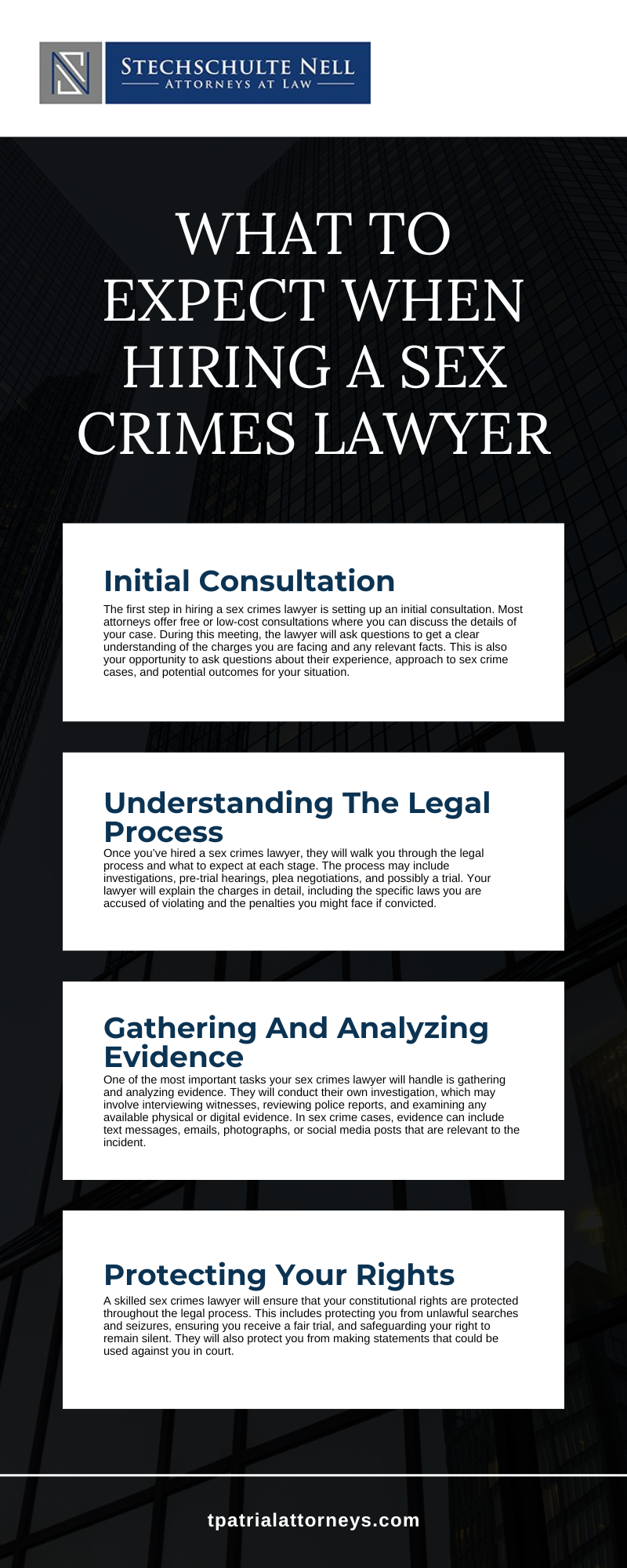
Tampa Sex Crimes Statistics
Only an estimated 30% of sexual assaults in the U.S. are reported to law enforcement. Studies indicate 5–10% of sex offenders re-offend after release, underscoring ongoing monitoring and rehabilitation challenges. On college campuses, approximately 1 in 5 women and 1 in 16 men report sexual assault, highlighting the need for robust prevention and response systems.
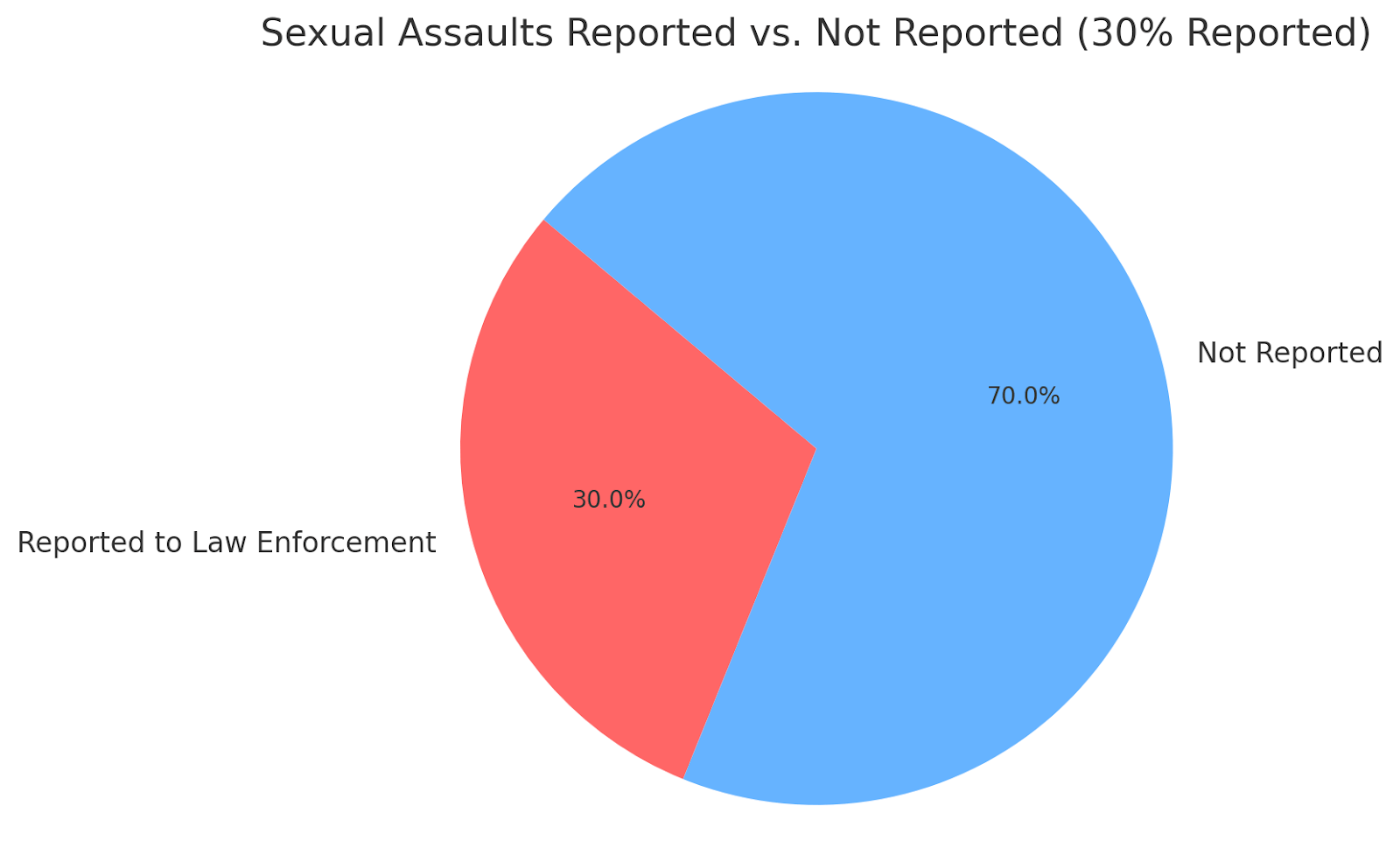
Tampa Sex Crimes FAQs
Our Tampa sex crimes defense attorney knows that false accusations can devastate your life and reputation. We deliver precise, evidence-based defenses to uncover inconsistencies, expose false motives, and protect your name.
What should I do if I’m falsely accused?
- Do not contact the accuser or attempt to explain; anything you say can be twisted.
- Avoid posting online; social media can be subpoenaed.
- Call a lawyer immediately to preserve evidence and prevent missteps.
We act quickly to collect digital communications, locate witnesses, and enforce proper procedure.
How can I prove the allegations are false?
- Expose inconsistencies in statements and reports;
- Present alibi evidence — GPS, phone, video;
- Investigate motives (revenge, custody, financial gain);
- Engage forensic/psychological experts as needed.
Can character witnesses help?
Yes — carefully prepared coworkers, friends, and community members can support credibility and timelines.
What role does forensic evidence play?
- Scrutinize DNA/toxicology/medical reports for errors;
- Challenge collection and storage protocols;
- Cross-examine experts and, when necessary, present independent experts.
Can charges be dismissed before trial?
Yes. Early intervention can lead to dismissal or reduction when credibility is lacking, procedure is violated, or evidence falls short.
How can digital evidence help? (New)
- Texts/emails showing consensual or non-incriminating communication;
- Social media activity placing you elsewhere;
- Location data from phones, vehicles, or apps confirming your alibi.
We ensure proper preservation and admissibility; deleted data may sometimes be recovered.
What if the accuser changes their story?
Shifting statements can undermine credibility. We document each version, cross-check against physical/digital evidence, and seek charge re-evaluation.
How do I manage the emotional impact?
- Seek support from trusted family or a qualified counselor;
- Avoid public discussion of details;
- Communicate through counsel and focus on documented facts.
Can I sue for false allegations?
Possibly — defamation or malicious prosecution may be considered after the criminal case ends. Your attorney will assess evidence and advisability.
How can I reduce risk of future false claims?
- Avoid private one-on-one situations prone to misinterpretation;
- Keep written communications professional;
- Save relevant texts/emails; set clear boundaries.
Final Guidance
False accusations are traumatic — but you are not alone. Early involvement of an experienced defense lawyer increases the chance to clear your name before matters escalate. We provide free, confidential case evaluations to help you regain control.

Tampa Sex Crimes Glossary
If you’ve been charged with a sex crime in Tampa, the situation can feel overwhelming. Led by board-certified criminal defense attorney Ben Stechschulte, our team fights for your rights and future. Below are key terms you may encounter:
Consent
Voluntary, informed, mutual agreement to engage in a specific activity. Consent must be freely given and can be withdrawn at any time. Intoxication, coercion, or incapacity can negate consent.
Statutory Rape
Sexual activity with a person under the legal age of consent (18 in Florida). Even if the younger party agrees, the law deems them unable to consent. Mitigating issues may include mistaken identity or misrepresented age.
Sex Offender Registration
Mandatory registration for certain convictions, with restrictions on residence, work, and travel, plus periodic check-ins. We work to minimize long-term consequences and pursue alternatives where available.
Forensic Evidence
Scientific data such as DNA, fingerprints, or digital records. Evidence must be lawfully obtained and properly handled; defects can support suppression and weaken the prosecution.
Credibility of Witnesses
Courts weigh witness reliability heavily in sex-crime cases. We highlight inconsistencies, motives, and conflicts with physical or digital evidence to create reasonable doubt.
StechLaw Criminal Defense, Tampa Sex Crimes Lawyer
1105 W Swann Ave, Tampa, FL 33606
Read more of our Google reviews and let us know how we can help.
Contact Our Tampa Sex Crimes Lawyer Today
If you’ve been arrested or charged with a sex crime in Tampa, you need an experienced advocate. At StechLaw Criminal Defense, we combine deep legal knowledge with former-prosecutor experience to build the strongest possible defense. See case results and call us today for a confidential consultation.