

Tampa Federal Criminal Defense Lawyer
Facing a federal criminal investigation is one of the most serious legal challenges a person can encounter. Federal prosecutors have vast resources, experienced agents, and strict sentencing guidelines that leave little room for error. At StechLaw Criminal Defense, our board-certified criminal trial attorney, Ben Stechschulte, brings decades of courtroom experience and a unique background as a former prosecutor. That combination gives our clients an essential advantage when every detail matters.
Why Federal Charges Are Different
Federal cases are not simply “bigger versions” of state crimes. They are built through lengthy investigations led by federal agencies such as the FBI, DEA, IRS, or ATF. Agents often collect months or even years of evidence before anyone is arrested. Once an indictment is filed, prosecutors rely on mandatory sentencing guidelines that can result in long prison terms even for first-time offenders.
Because of this, the most effective defense begins before formal charges are filed. Our firm acts quickly to protect your rights the moment you learn you are under investigation or receive a target letter from a federal agency. Early intervention can make the difference between avoiding indictment and facing a federal trial.
Our Approach to Federal Defense
When you contact our Tampa office, we move fast to control the situation. Our process includes:
- Immediate investigation – reviewing search warrants, subpoenas, and the scope of agency authority.
- Preserving your rights – ensuring no statements are made without counsel and no unlawful search exceeds its warrant.
- Evidence analysis – assessing digital records, surveillance, and financial documentation to identify weaknesses or constitutional violations.
- Strategic engagement – negotiating with prosecutors when appropriate or preparing for litigation when necessary.
Every step is guided by one priority: protecting your freedom and future.
Common Federal Charges We Defend
Federal offenses often involve complex statutes and multi-agency cooperation. Our experience covers:
- White-collar crimes: fraud, embezzlement, money laundering, insider trading
- Drug trafficking and conspiracy
- Firearms and weapons offenses
- Public corruption and bribery
- Cybercrimes, identity theft, and computer intrusion
- Tax evasion and IRS investigations
- Immigration and border-related offenses
Whether your case begins with a grand-jury subpoena or an unexpected knock from investigators, we ensure you understand your rights and options from the first conversation.
Case Snapshot: From Target Letter to Dismissal
A Tampa business owner received a target letter alleging mail fraud related to government contracts. We immediately contacted the assigned Assistant U.S. Attorney, presented mitigating documentation, and demonstrated the client’s lack of criminal intent. Within weeks, the investigation was closed without charges.
Every case is unique, but proactive communication and evidence presentation can often prevent indictment altogether.
Building a Federal Defense Strategy
Our strategies depend on the specific facts and stage of the case. Common defense avenues include:
- Challenging search and seizure procedures under the Fourth Amendment.
- Disputing intent or knowledge, especially in financial or regulatory cases.
- Analyzing the chain of custody for digital or physical evidence.
- Questioning witness credibility or the reliability of cooperating informants.
- Negotiating pre-trial diversion or plea agreements that minimize sentencing exposure.
- Preparing for trial when the government’s evidence cannot withstand scrutiny.
Each strategy is informed by our deep familiarity with federal sentencing guidelines (USSG) and how mitigating factors can reduce potential penalties.
Understanding Federal Sentencing
The U.S. Sentencing Guidelines assign each offense a level that corresponds to a recommended sentencing range. Factors such as criminal history, role in the offense, and acceptance of responsibility all influence the final outcome. We help clients understand how these numbers translate into real-world consequences and identify legal grounds for departures or variances that may significantly lower the sentence.
Case Snapshot: Reducing a Federal Sentence
A client charged with wire fraud faced a guideline range exceeding ten years. Through strategic objections to the Presentence Investigation Report and detailed proof of restitution efforts, we convinced the court to impose probation instead of imprisonment.
This outcome underscores the value of preparation and an attorney who understands the nuances of federal sentencing law.
The Stages of a Federal Case
- Investigation or Target Letter – Federal agents collect evidence; you may be asked to appear before a grand jury.
- Indictment and Arrest – Formal charges are filed and an arraignment follows.
- Discovery and Motions – We obtain evidence, challenge illegal searches, and file motions to suppress.
- Negotiation and Plea Discussions – If appropriate, we pursue favorable resolutions before trial.
- Trial – We defend you before a federal jury, using expert witnesses and cross-examination to expose weaknesses in the government’s case.
- Sentencing and Appeals – If convicted, we advocate for reduced penalties and, when justified, pursue appeals or post-conviction relief.
Why Board Certification Matters
Board certification in criminal trial law is earned by fewer than two percent of Florida attorneys. It requires rigorous testing, peer review, and extensive jury-trial experience. Attorney Ben Stechschulte’s dual background as a former prosecutor and board-certified defense lawyer gives our clients insight into how both sides think — allowing us to anticipate prosecutorial tactics and counter them effectively.
Client-Centered Representation
Every client’s story matters. We take the time to learn about your background, profession, and family responsibilities so that we can humanize your case before the court. Our guiding principles are:
- Communication – Regular updates and honest evaluations.
- Preparation – Every file is handled as if it will proceed to trial.
- Respect – You are treated with dignity, not judgment.
What To Do If Contacted by Federal Agents
- Remain polite but decline to answer questions until you speak with an attorney.
- Request business cards from the agents for your lawyer’s reference.
- Contact a qualified federal criminal defense lawyer immediately.
- Avoid discussing the situation with friends, co-workers, or social media contacts.
- Preserve all relevant documents and electronic records.
Prompt legal action can sometimes prevent formal charges and protect your professional and personal reputation.
The First 72 Hours Checklist
If you are arrested or learn you are under investigation, time is critical. Our internal checklist covers:
- Confirming the jurisdiction and agency involved.
- Reviewing any search-warrant return or subpoena.
- Notifying family and arranging for bail or bond hearing if applicable.
- Collecting financial and communication records for attorney review.
- Avoiding direct contact with any potential witnesses or co-defendants.
During your consultation, we walk you through each step and prepare a plan tailored to your situation.
Professional Recognition and Local Insight
Our firm regularly appears before judges in the Middle District of Florida, including Tampa and Fort Myers divisions. Knowing how individual judges and U.S. Attorneys handle specific types of cases allows us to anticipate procedural preferences and sentencing tendencies that could affect your result. This local insight is invaluable when crafting a defense strategy.
Collateral Consequences of Federal Convictions
Beyond incarceration, a federal conviction can result in:
- Loss of voting and firearm rights
- Permanent criminal record visible on background checks
- Immigration consequences for non-citizens
- Barriers to professional licensing and employment
- Even probationary outcomes can carry these penalties. We focus on mitigating both the legal and personal impact.
Types of Federal Criminal Defense We Handle
 When you face charges in federal court, the stakes are significantly higher than in state proceedings. Federal cases involve different rules, harsher sentencing guidelines, and prosecutors with substantial resources. StechLaw Criminal Defense represents individuals throughout Florida who are facing serious federal allegations.
- White-Collar Crimes: These charges include fraud, embezzlement, money laundering, securities violations, and tax evasion. Cases often involve complex financial records and lengthy investigations spanning months or years. Penalties can include substantial prison time, heavy fines, and restitution orders.
- Drug Trafficking and Distribution: Federal drug charges typically involve large quantities, interstate transport, or connections to organized operations. The government aggressively prosecutes these cases using wiretaps, informants, and surveillance evidence. Mandatory minimum sentences make early intervention particularly important.
- Weapons Offenses: Illegal possession, trafficking, or use of firearms in connection with other crimes can trigger federal prosecution. Charges under the National Firearms Act carry stiff penalties that often run consecutive to other sentences. Prior convictions can significantly increase potential prison time.
- Public Corruption: Charges against government officials, contractors, or anyone involved in bribery and kickbacks fall under federal jurisdiction. These cases often stem from undercover operations or cooperating witnesses. A conviction can result in prison, loss of pension benefits, and permanent career damage.
- RICO and Organized Crime: The Racketeer Influenced and Corrupt Organizations Act allows prosecutors to target individuals involved in ongoing criminal enterprises. RICO charges can connect defendants to crimes they did not personally commit. Sentences under this statute are among the most severe in federal law.
- Cybercrime and Identity Theft: Hacking, wire fraud, and schemes involving stolen personal information are increasingly common federal charges. These cases often involve digital evidence that requires careful technical analysis. Prosecutors pursue these matters aggressively due to the number of potential victims involved.
- Healthcare Fraud: False billing, kickback schemes, and fraudulent claims submitted to Medicare or Medicaid programs result in federal charges. Investigations often begin with data analysis that identifies billing anomalies. Defendants face prison, exclusion from federal healthcare programs, and substantial financial penalties.
- Child Exploitation Offenses: Possession, distribution, or production of child pornography, as well as online enticement, are aggressively prosecuted. Federal sentencing guidelines impose lengthy mandatory minimums for these offenses. Defendants also face lifetime registration requirements upon release.
- Bank Robbery and Financial Institution Crimes: Any crime committed against a federally insured bank or credit union is automatically a federal offense. These cases move quickly and often involve multiple charges stemming from a single incident. Sentences frequently exceed ten years even for first-time offenders.
- Immigration Crimes: Illegal reentry, harboring undocumented individuals, and document fraud are prosecuted at the federal level. Prior deportations can trigger enhanced penalties under federal law. Convictions often result in both prison time and subsequent removal proceedings.
If you are under investigation or have been charged, speaking with a Tampa federal criminal defense lawyer can help you understand your options and begin building a defense strategy.
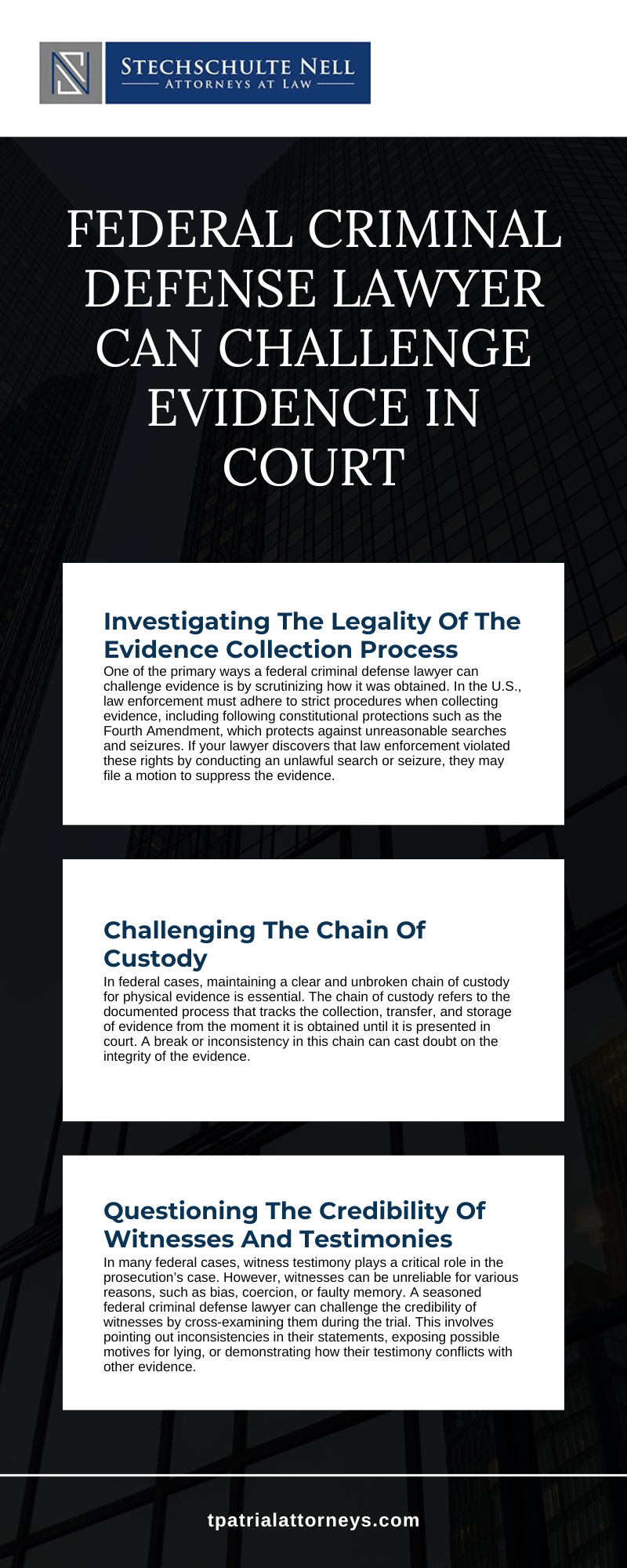
Tampa Federal Criminal Defense Infographic
Federal Criminal Defense Statistics
Criminal defense attorneys represent individuals who are accused of criminal activities, defending them against charges ranging from misdemeanors to serious felonies. Our attorneys defend people accused of crimes at both the state and federal levels.
Key Statistics
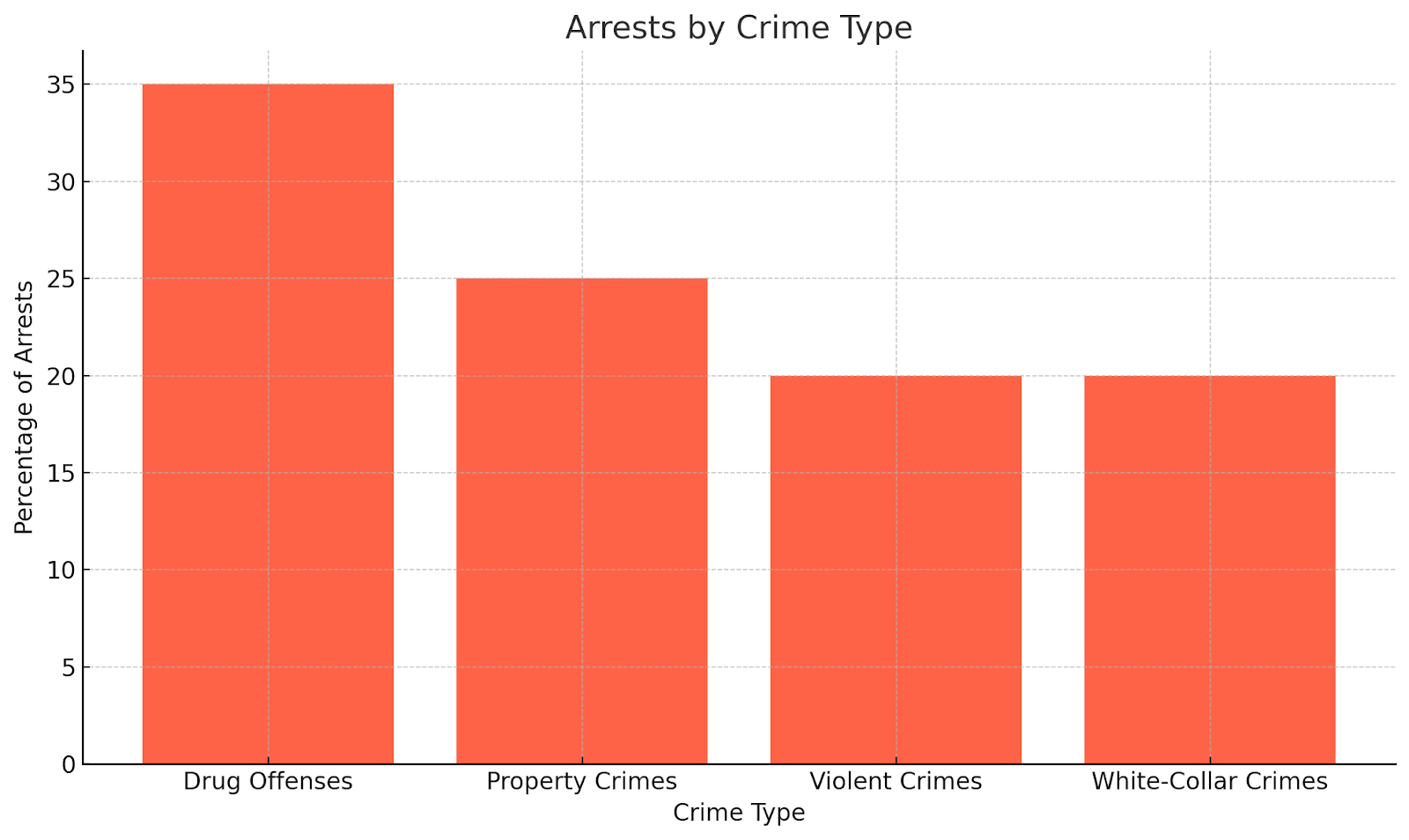
- Prevalence of Criminal Cases: The Bureau of Justice Statistics (BJS) reports that over 10 million arrests are made annually in the United States. This includes arrests for various crimes such as drug offenses, property crimes, violent crimes, and white-collar crimes. The majority of criminal cases are handled at the state and local level, with only a small percentage being federal cases.
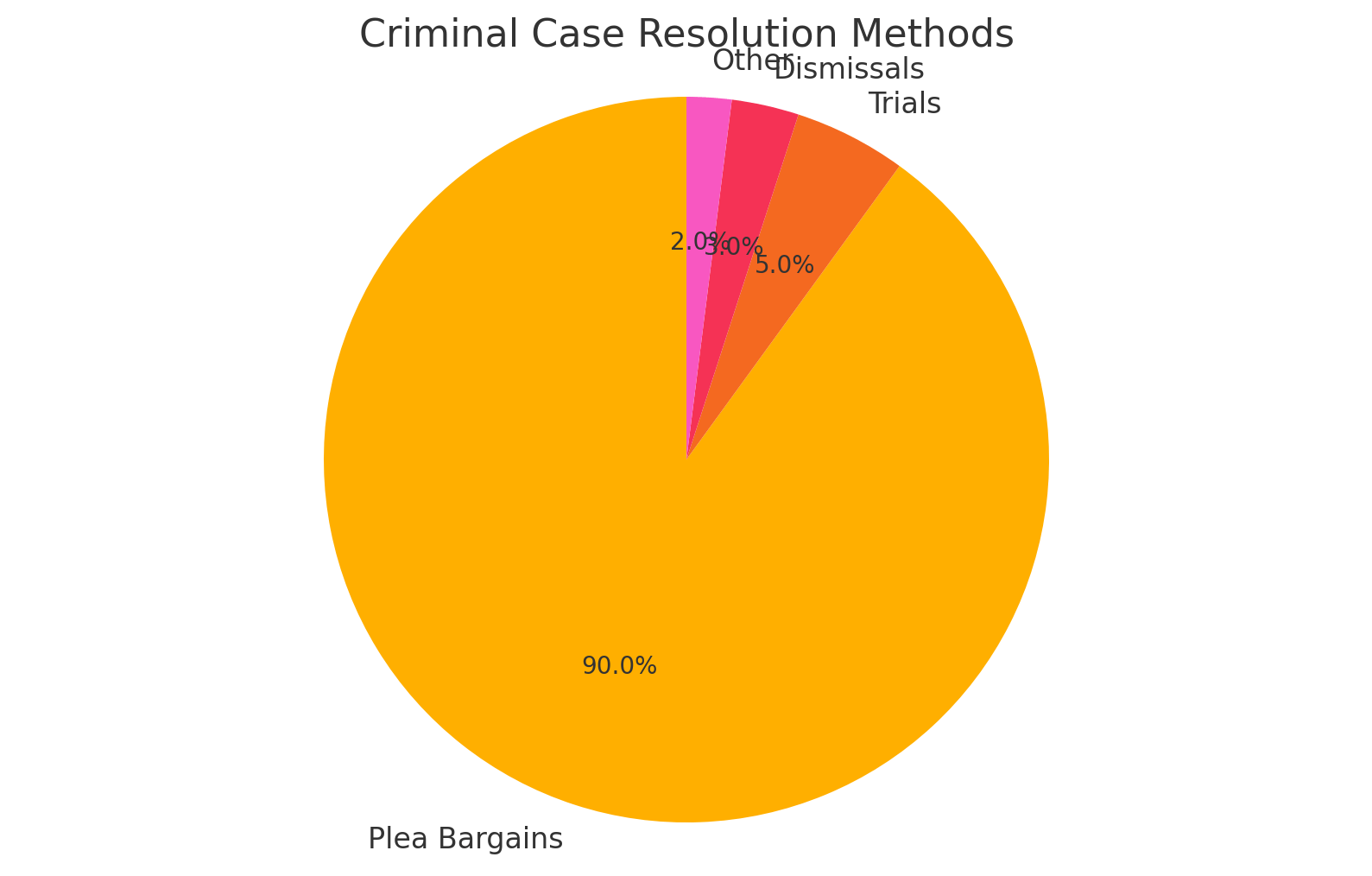
- Defense and Prosecution: In criminal trials, over 90% of cases are resolved through plea bargains, rather than going to trial. This means that most criminal cases are settled out of court, with the defense negotiating a plea agreement with the prosecution. Only about 5-10% of criminal cases actually reach a trial, where the defense plays a crucial role in challenging the prosecution’s evidence and presenting a case for the defendant’s innocence or a lesser offense.
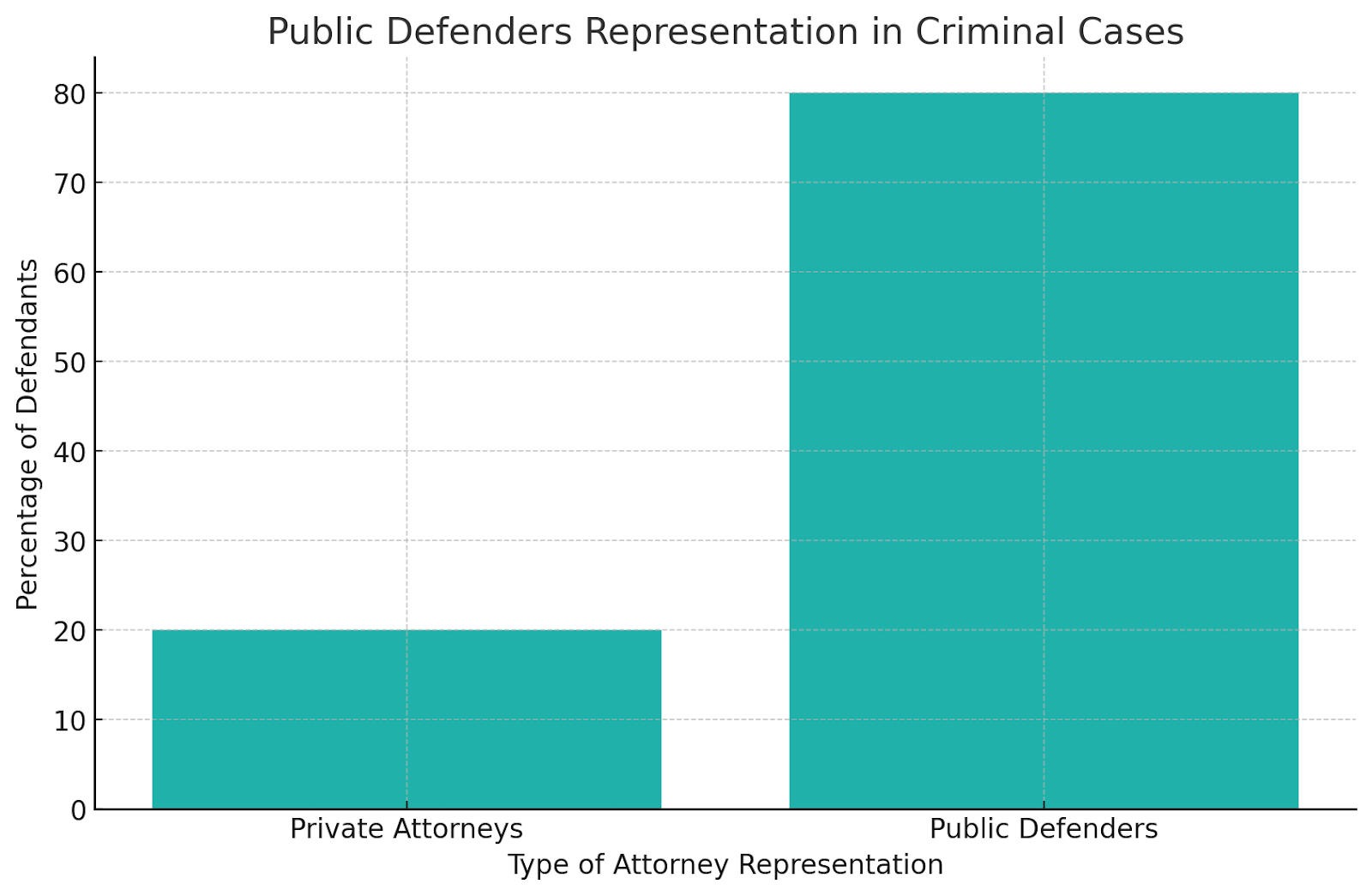
- Public Defenders: A significant portion of criminal defendants cannot afford private attorneys, leading to a reliance on public defenders. In fact, approximately 80% of criminal defendants in the U.S. are represented by public defenders, who often handle heavy caseloads and face limited resources.
- Conviction Rates: According to various studies, about 90-95% of criminal defendants who are represented by legal counsel (either public defenders or private attorneys) are convicted in state courts, though convictions are often reduced through plea bargaining or other negotiations.
The following charts illustrate key trends:
Questions To Ask Your Lawyer At Your First Meeting
Meeting with a Tampa federal criminal defense lawyer for the first time can feel overwhelming. Federal cases are complex, and understanding how to make the most of your consultation can set the tone for your entire defense. At StechLaw Criminal Defense, we encourage open communication and transparency — the more informed you are, the stronger your defense will be.
What Are the Potential Consequences of the Charges I’m Facing?
Start by asking your lawyer to explain the specific charges against you and their potential penalties.
Federal crimes often carry severe consequences — including substantial fines, asset forfeiture, supervised release, or long prison sentences under the U.S. Sentencing Guidelines (USSG).
Your attorney should walk you through possible outcomes, discuss aggravating or mitigating factors, and explain how plea negotiations or cooperation could affect sentencing.
Knowing the full scope of your exposure helps you make clear, confident decisions early.
How Will You Approach My Defense?
Every defense strategy is unique. A qualified attorney should outline how they’ll analyze the indictment, evidence, and agency investigation to build your case.
Ask how they intend to challenge evidence — for example, filing motions to suppress illegally obtained material, questioning the chain of custody, or negotiating for charge reductions.
At StechLaw Criminal Defense, we also explain how pre-trial motions, plea discussions, and trial preparation work together to achieve the best possible outcome.
What Should I Avoid Doing or Saying During the Case?
Your words and actions matter. A single comment to investigators, coworkers, or on social media can jeopardize your defense.
Ask your attorney what you should and shouldn’t discuss, including how to respond if contacted by federal agents or co-defendants.
Your lawyer can provide guidelines on avoiding behavior that could be misinterpreted — ensuring you don’t unintentionally harm your credibility or violate release conditions.
How Long Will This Process Take?
Federal cases move more slowly than state proceedings.
While no attorney can give an exact timeframe, your lawyer should help you understand key phases:
- Investigation or Target Letter stage
- Indictment and arraignment
- Discovery and pre-trial motions
- Plea negotiations or trial
- Sentencing and appeals
Knowing what to expect at each step helps you plan for court appearances, work obligations, and emotional preparation.
What Can I Do To Assist in My Defense?
Your cooperation can make a real difference.
Ask your lawyer what documents or background information could strengthen your case — such as correspondence, emails, or financial records.
Witness names, timelines, or text messages may also be vital.
Your attorney may advise keeping a detailed chronology of events or any communications with investigators. Staying organized and responsive helps your defense team build a comprehensive, evidence-based strategy.
What Experience Do You Have With Federal Cases Like Mine?
Because federal law differs from state procedure, ask your attorney about their specific experience with federal indictments, plea negotiations, and trials in the Middle District of Florida.
Attorney Ben Stechschulte is board-certified in criminal trial law — a credential earned by fewer than 2% of Florida attorneys — and regularly represents clients in federal court.
This level of certification and courtroom familiarity ensures your defense is guided by proven expertise and practical insight.
How Will You Communicate With Me Throughout the Case?
Strong communication builds trust. Ask how often you’ll receive updates, whether you’ll communicate directly with your lawyer, and how quickly messages or emails are returned.
At StechLaw Criminal Defense, clients receive direct access to their attorney, detailed explanations before every hearing, and realistic expectations about next steps.
Meeting with a lawyer for federal criminal charges is a critical first step. By asking the right questions, you’ll better understand your case, your options, and the path forward. At StechLaw Criminal Defense, we’re committed to working closely with our clients to develop a defense tailored to their unique circumstances. Attorney Ben has been awarded the Top-Rated Lawyer in 2020 and knows how to help with your case. For help, call our federal criminal defense lawyer in Tampa today.

Tampa Federal Criminal Defense Glossary
Facing federal criminal charges is a serious matter that can impact every aspect of your life. At StechLaw Criminal Defense, we focus on delivering a robust defense for our clients, using our extensive knowledge of federal law and courtroom procedures. To help you better understand federal criminal cases, we’ve compiled definitions of key terms and processes frequently encountered.
Indictment
An indictment is a formal document issued by a grand jury that officially charges an individual with a federal crime. It signifies that the grand jury has found sufficient evidence to proceed with prosecution. Indictments are common in federal cases, as the government must prove probable cause before moving forward. For example, someone accused of mail fraud in a multi-state operation might be indicted after investigators present evidence of fraudulent activities. An indictment does not prove guilt—it is simply a starting point for the case. At StechLaw Criminal Defense, we critically evaluate indictments, looking for gaps in the evidence or procedural errors to strengthen your defense.
Federal Sentencing Guidelines
Federal sentencing guidelines provide judges with a framework to determine sentences for those convicted of federal crimes. These guidelines consider the nature of the offense, the defendant’s criminal history, and other relevant factors.
For instance, a conviction for drug trafficking involving large quantities may carry a mandatory minimum sentence under these guidelines. While judges are not strictly bound by these rules, they often use them as a baseline. Our legal team works to identify mitigating factors that can reduce your sentence, such as your role in the crime, cooperation with investigators, or lack of prior offenses.
Discovery Process
The discovery process is a critical phase of any federal criminal case. During this stage, the prosecution is required to share evidence with the defense, including witness lists, documents, and other relevant materials. For example, in a federal embezzlement case, the discovery might include bank records, emails, and audit reports. This process is essential for building a defense strategy.
At StechLaw Criminal Defense, we meticulously review every piece of evidence disclosed during discovery, often uncovering procedural violations or inconsistencies that can be used to challenge the prosecution’s case. Our goal is to find weaknesses in the evidence and leverage them to our client’s advantage.
Motion To Dismiss
A motion to dismiss is a legal filing that requests the court to terminate a case before it proceeds to trial. There are many grounds for filing such a motion, including lack of evidence, improper jurisdiction, or constitutional violations during the investigation.
For instance, in a case involving illegal search and seizure of a client’s property, we may argue that the evidence collected should be excluded, resulting in the dismissal of the case. Successfully filing a motion to dismiss can prevent a lengthy trial and protect clients from the risks of conviction and sentencing.
At StechLaw Criminal Defense, we thoroughly evaluate all available options to file pre-trial motions that could benefit your case.
Plea Agreement
A plea agreement is a negotiated resolution in which the defendant agrees to plead guilty to certain charges in exchange for concessions from the prosecution. These concessions often include reduced charges or lighter sentencing recommendations.
For example, a defendant facing multiple counts of fraud might agree to plead guilty to one count to avoid the risk of more severe penalties at trial. While plea agreements can help resolve cases efficiently, they must be approached with caution.
Chain Of Custody
Chain of custody refers to the documentation and handling of evidence from the time it is collected until it is presented in court. It ensures that the evidence has not been tampered with, altered, or mishandled. Any break or inconsistency in the chain of custody can render evidence unreliable and inadmissible. For example, in a firearms possession case, the prosecution must prove that the weapon presented in court is the same one allegedly seized from the defendant. At StechLaw Criminal Defense, we closely examine the chain of custody for all evidence, looking for opportunities to challenge its validity and weaken the prosecution’s case.
Federal Appeals Process
Even after a conviction, the federal criminal process may not be over. The appeals process provides an opportunity to challenge legal errors made during the trial, such as improper jury instructions, evidentiary rulings, or procedural violations. Unlike a trial, an appeal focuses on the application of the law rather than the facts of the case.
For example, if a defendant’s rights were violated during their arrest or if evidence was admitted improperly, an appeal could result in the reversal of a conviction or a new trial. At StechLaw Criminal Defense, we have experience navigating federal appeals and advocating for clients even after a trial has concluded.
Why Experience Matters In Federal Crimes Defense
You need counsel who reads the guideline math and the case file with equal care. Our law team knows that with federal crimes come steeper punishments, and understanding complicated guidelines means we are able to argue for lesser penalties and help you get your life back on track. We have:
• Years of federal investigations, indictments, and sentencings across the Middle District of Florida.
• Board Certified Criminal Trial Lawyer leading strategy on motions, trials, and pleas.
• Rated by Super Lawyers, Avvo Client’s Choice Awards, Avvo 10.0 rating, Top-Rated Lawyer 2020.
• Relationships with investigators, digital forensics, and mitigation professionals who strengthen outcomes.
“Ben and his team are amazing!I couldn’t be more impressed with the service I received from StechLaw Criminal Defense.Finding a trustworthy and knowledgeable legal team is essential—and they exceeded all my expectations. From the very first consultation at I had at 10pm on a Friday night, Ben personally took the time to understand my legal needs and provided clear, practical advice and continued every step of the way.His assistant’s expertise was also evident. She was always prompt in her call returns and email responses, and thorough in answering any and all my questions.Their entire team is connected to a texting line that they all have access to and can respond to, who ever is able to get you your answer first. I was able to text personally with Ben on a regular basis about my case which I really appreciated.Ben was a former prosecutor so he is well connected to the state attorneys, knows their strategies, and he is extremely familiar (and has positive rapport) with many of the Judges. This is a huge asset for anyone hiring counsel.It’s rare to find a law firm that combines professionalism and expertise with such a personal touch. I highly recommend StechLaw Criminal Defense to anyone looking for reliable, top-quality legal support.” – Lauren B.
Contact Our Tampa Federal Criminal Defense Team
If you believe you are under federal investigation or have already been charged, don’t wait. The earlier you act, the stronger your defense will be. Call StechLaw Criminal Defense today for a confidential consultation. We will review your situation, explain your options, and begin protecting your rights immediately.
Your future deserves experienced representation and a strategy designed for results. Trust a board-certified Tampa criminal defense lawyer to stand between you and the full weight of the federal government.