
 Last Updated: 08-21-2026
 Read Time – Est:

Drug Defense Lawyer Hillsborough County, FL
If you have been arrested for a drug offense in Hillsborough County, the charge that appears on the arrest paperwork is often only the starting point. Florida law treats drug offenses on a graduated scale that begins with simple possession and moves through possession with intent to sell, distribute, manufacture, and traffic, with each tier carrying materially different penalties. Trafficking charges in particular are structured around weight thresholds that trigger mandatory minimum prison terms regardless of intent.
The defense strategy available in your case depends not only on the conduct alleged but also on how the evidence was gathered, where it was found, and whether your constitutional rights were respected during the investigation. Our Hillsborough County, FL drug defense lawyer has practiced criminal defense in the Tampa Bay area for nearly 15 years and represents clients facing the full range of state and federal drug allegations. Contact our firm today to schedule a complimentary consultation.
Why Choose StechLaw Criminal Defense for Drug Defense in Hillsborough County, FL?
The outcome of a drug case frequently depends on issues that are easy to overlook at the outset. Whether the traffic stop was supported by reasonable suspicion, whether the search exceeded the scope of consent, whether the evidence chain of custody was properly maintained, and whether laboratory testing complied with applicable protocols can each prove dispositive. Effective representation requires careful attention to these issues from the earliest stage of the matter.
Board-Certified Former Prosecutor
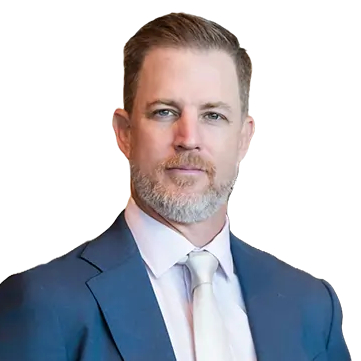
Ben Stechschulte is board certified in criminal trial law by The Florida Bar, a credential held by approximately one percent of Florida attorneys. Mr. Stechschulte previously served as a prosecutor in Hillsborough County, providing direct insight into how the State Attorney’s Office evaluates drug evidence, calculates trafficking weight, and identifies the cases most amenable to negotiated resolution. He has tried in excess of 60 cases to verdict. Mr. Stechschulte received his Juris Doctor from Stetson University College of Law and was named a Super Lawyers Rising Star in 2015.
Suppression and Motion Practice
A substantial number of drug cases are resolved or significantly reduced through motions to suppress challenging the lawfulness of the stop, search, or seizure. Our criminal defense lawyer in Hillsborough County, FL reviews body camera footage, dispatch records, search warrant affidavits, and laboratory documentation against the applicable Fourth Amendment and Florida statutory standards. Where the evidence was obtained in violation of constitutional protections, motions can result in exclusion of the seized substance and dismissal of the charges.
Drug Court and Diversion Pathways
The Hillsborough County Drug Treatment Court, administered by the Thirteenth Judicial Circuit, offers qualifying nonviolent defendants an alternative to traditional prosecution that emphasizes treatment, accountability, and gradual reduction of court supervision. Pretrial intervention programs administered through the State Attorney’s Office may also provide resolution pathways for first-time defendants. Eligibility criteria are specific, and admission requires negotiation rather than automatic enrollment.
⭐⭐⭐⭐⭐
“I had a very good experience with Ben. Never once did I have to wait for an answer to any of my questions no matter how small they were. He always called me personally. And he worked everything out on my case and I ended up with probation rather than something worse. I’m very pleased and if God forbid something comes up again I will definitely call him first and no one else.” — Jason G.
Additional client reviews are available on our Google Business Profile.
Types of Drug Defense Cases We Handle in Hillsborough County
Drug prosecutions in Hillsborough County encompass a wide range of conduct, substances, and statutory provisions. The specific charge, the substance involved, and the alleged quantity each shape the available defense strategy. Our firm represents clients in drug matters of the following types:
- Simple possession of controlled substances. Charges under Florida Statute § 893.13 involving cocaine, methamphetamine, MDMA, prescription medications without valid authorization, and other controlled substances. Possession of more than 20 grams of marijuana also falls within this category.
- Felony drug trafficking. Prosecutions under Florida Statute § 893.135 where the quantity of the substance exceeds the statutory trafficking threshold. Trafficking charges carry mandatory minimum prison terms based on weight, regardless of whether sale or distribution is alleged.
- Possession with intent to sell or distribute. Charges in which the State seeks to prove distributive intent through circumstantial evidence including quantity, packaging, scales, currency, or text communications. The line between personal use possession and possession with intent is frequently contested.
- Drug sale and delivery. Charges arising from controlled buys, undercover operations, or confidential informant transactions. The reliability of informants, the conditions of the controlled buy, and the chain of evidence frequently warrant scrutiny.
- Drug manufacturing and cultivation. Prosecutions involving the alleged manufacture of methamphetamine, cultivation of marijuana, or production of other controlled substances. These cases often arise from search warrants and require examination of warrant affidavits and execution.
- Prescription drug offenses. Matters involving alleged forged prescriptions, doctor shopping, or unauthorized possession of medications including oxycodone, hydrocodone, alprazolam, and amphetamine-based prescriptions. Pharmacy fraud and pill mill allegations represent a related category that frequently involves both state and federal authorities.
- Drug paraphernalia. Charges under Section 893.147 involving items associated with drug use or distribution. Defense often centers on legitimate alternative uses and the absence of controlled substances.
- School zone, park, and public housing enhancements. Section 893.13(1)(c) imposes enhanced penalties for drug offenses occurring within 1,000 feet of schools, parks, public housing, and other designated locations. Geographic proximity is a question of fact subject to challenge.
- Federal drug offenses. Cases prosecuted in the Middle District of Florida under federal drug statutes at 21 U.S.C. §§ 841 and 846. Federal prosecutions are governed by the United States Sentencing Guidelines and frequently involve mandatory minimum sentencing tied to drug quantity.
- Juvenile drug cases. Drug allegations against minors that proceed through the juvenile delinquency system under Chapter 985, with the goal of resolution that protects long-term educational and employment opportunities.
- Fentanyl-specific charges. Prosecutions under Florida Statute § 893.135(1)(c) involving fentanyl, fentanyl analogues, and mixtures containing fentanyl. The trafficking thresholds for fentanyl penalties are substantially lower than for many other controlled substances.
Florida Legal Requirements for Drug Defense
Florida drug law is codified principally in Chapter 893 of the Florida Statutes, which establishes the schedules of controlled substances and the criminal penalties applicable to possession, sale, manufacture, and trafficking. The Florida controlled substance schedules largely mirror the federal Controlled Substances Act but contain certain state-specific classifications.
The trafficking provisions at Section 893.135 establish weight thresholds that trigger mandatory minimum prison sentences. For cocaine, the threshold begins at 28 grams, which carries a three-year mandatory minimum and $50,000 fine. For methamphetamine, the threshold begins at 14 grams. For oxycodone and hydrocodone, the threshold begins at 4 grams. For fentanyl, the threshold begins at 4 grams of any mixture containing fentanyl. The mandatory minimum increases at each higher weight tier.
Florida’s drug paraphernalia statute at Section 893.147 prohibits possession of items used or intended for use with controlled substances. The statute applies to a broad category of items including pipes, scales, syringes, and packaging materials, and assessment of intent often turns on context.
The Fourth Amendment to the United States Constitution and Article I, Section 12 of the Florida Constitution govern the lawfulness of searches and seizures in drug cases. Suppression of unlawfully obtained evidence under the exclusionary rule frequently determines the outcome. The Florida Supreme Court’s decisions interpreting the state constitutional protections establish standards relevant to vehicle searches, consent searches, dog sniffs, and warrant execution.
For Hillsborough County defendants, the Thirteenth Judicial Circuit Drug Court provides an alternative resolution framework for qualifying nonviolent drug offenders. Successful completion may result in dismissal of charges, with terms negotiated through the State Attorney’s Office and approved by the assigned judge.
Important Aspects of a Hillsborough County Drug Defense Case
Drug matters involve several procedural junctures that disproportionately influence the outcome. Recognition of these stages allows clients and their families to focus on the issues most likely to shape the disposition.
The Initial Stop and Search
A substantial portion of drug cases originates from traffic stops. Florida law requires that an officer possess reasonable suspicion of a traffic infraction or criminal activity before initiating a stop. Where the basis for the stop is questionable, evidence obtained during the stop may be subject to suppression. Searches conducted during a traffic stop are governed by additional doctrines addressing consent, plain view, the automobile exception, dog sniffs, and protective frisks. Body camera and dashboard camera footage often becomes the central evidence in evaluating the lawfulness of the stop and search.
Constructive Possession and Multi-Occupant Settings
Drug charges arising in vehicles, residences, or other multi-occupant settings frequently turn on the doctrine of constructive possession. The State must prove that the defendant had knowledge of the substance and the ability to exercise dominion and control over it. Where multiple occupants had access to the area in which the substance was found, the State’s burden becomes more difficult, and the defense often centers on demonstrating that another occupant is the more probable possessor.
Laboratory Testing and Chain of Custody
The substance alleged to be a controlled substance must be tested by a qualified laboratory before charges can be sustained at trial. Field tests used at the scene of arrest are not admissible to establish identity at trial because of their high false-positive rates. Confirmatory laboratory testing must comply with established protocols regarding sampling, instrumentation, and chain of custody. In trafficking cases, the precise weight calculation can determine the applicable mandatory minimum, making laboratory methodology a frequent point of contest.
Trafficking Weight Calculation
In trafficking cases, the weight calculation includes any “mixture containing” the controlled substance, not just the pure controlled substance itself. This rule produces results that often surprise defendants, as the weight of cutting agents, binders, and inactive ingredients counts toward the trafficking threshold. Analysis of the laboratory report and the methodology used to determine total weight is therefore essential in any trafficking matter.
Drug Court and Diversion Eligibility
For qualifying nonviolent defendants, drug court provides a treatment-oriented alternative to traditional prosecution. Eligibility typically requires a charge below the trafficking threshold, absence of prior violent convictions, and willingness to complete the program’s treatment, testing, and supervision components. Diversion programs administered through the State Attorney’s Office may also provide resolution pathways that avoid adjudication. The decision whether to pursue drug court or diversion involves weighing the program’s requirements against the strength of the State’s case.
Sentencing and Collateral Consequences
If a drug case proceeds to conviction, sentencing follows the Florida Criminal Punishment Code for felonies, with mandatory minimums applicable in trafficking cases and certain enhancement scenarios. Collateral consequences extend well beyond the criminal sentence and may include driver’s license suspension under Section 322.055, federal student aid implications, professional licensing impacts, and immigration consequences. For non-citizen defendants, drug convictions carry particularly severe immigration exposure, including potential deportability for almost any drug offense beyond a single instance of simple possession of small amounts of marijuana.
Contact StechLaw Criminal Defense
If you have been arrested on a drug charge, served with a warrant on a drug allegation, or otherwise notified that a drug case has been filed against you in Hillsborough County, prompt consultation preserves the full scope of available legal options. Trafficking cases in particular benefit from early defense engagement, as evidentiary issues and weight calculation challenges often must be developed early to be most effective.
Our firm provides complimentary consultations for drug matters. During the consultation, we will review the circumstances of the arrest, evaluate the applicable statutory framework, and outline the anticipated course of representation. Contact us to schedule a consultation with a Hillsborough County drug defense attorney.
Drug Defense Statistics in Hillsborough County, FL
 Hillsborough County drug cases run the range from simple possession to trafficking, and how a case resolves often depends as much on the available programs as on the charge itself. The figures below focus on that resolution side, including the drug court and treatment paths this county uses.
The data comes from federal research and Florida law-enforcement sources. It describes broad patterns rather than any individual matter, but it helps explain the options a defendant may have in Hillsborough County.
- Drug courts reduce reoffending. Federal researchers found that in one county studied, the felony re-arrest rate fell from about 40 percent before the drug court to about 12 percent after it began.
- The savings are real too. A long-running drug court lowered recidivism over many years and saved thousands of dollars per participant compared with traditional prosecution.
- Many defendants have limited history. A large share of people sentenced in federal drug cases had little or no prior criminal record, and in federal powder cocaine cases about two-thirds did.
- At the state level, Florida agencies report a large volume of drug arrests each year across the state’s counties.
Types of Evidence in a Hillsborough County Drug Case
Drug prosecutions are built on a familiar set of evidence, and each piece can be tested. Understanding what the State relies on helps a Hillsborough County drug defense attorney find the weak points early.
- The substance and its lab result. The State must prove what the substance was through confirmatory laboratory testing, not the roadside field test, which is prone to false positives. The methodology and the chain of custody are both open to challenge.
- The weight calculation. In trafficking cases, the reported weight can include filler and inactive ingredients, which surprises many defendants. Because the weight drives the exposure, the way the lab measured it deserves close review.
- Surveillance and controlled buys. Cases built on undercover operations turn on how the buy was set up and documented, and gaps in that record can undermine the State’s account.
- Confidential informants. Informant testimony carries built-in credibility questions, including the informant’s own history and motives, which can be tested through cross-examination.
- Digital and financial records. Texts, messages, and money are often offered to show intent to sell, and their meaning is frequently more ambiguous than the State suggests.
- The stop and search record. Body camera footage and the basis for the stop are central, because if officers lacked probable cause or exceeded a lawful search, the Fourth Amendment may keep the evidence out.
- Statements. What a person said after the stop can become the strongest evidence against them, which is why understanding the Fifth and declining to talk without counsel matters so much.
Hillsborough County Drug Defense Lawyer FAQs
Do you offer a free consultation for a drug case?
Yes. We offer free, confidential consultations to people arrested for or charged with a drug offense in Hillsborough County. The meeting is a chance to understand the charge, review how the evidence was gathered, and hear how a Hillsborough County drug defense attorney would approach the case. A complete file is not required to meet. Even a partial account of the arrest helps us identify where the State’s case may be open to challenge, and there is no obligation to hire the firm afterward. Because the earliest decisions in a drug case are often the most consequential, meeting sooner gives us more room to protect your options.
How much does a drug defense cost?
Cost depends on the charge, the volume of evidence, and whether the case resolves early or proceeds to trial. A simple possession count differs greatly from a trafficking or multi-defendant case with extensive discovery. We discuss the fee structure openly during the consultation, so you can plan rather than guess, and we would rather give an accurate picture than a figure that does not hold once the evidence is reviewed.
Am I eligible for drug court or diversion?
Possibly. The Hillsborough County drug court and the pretrial diversion programs run through the State Attorney’s Office offer treatment-oriented alternatives for qualifying nonviolent defendants, often leading to a dismissal on successful completion. Eligibility usually requires a charge below the trafficking level and no disqualifying history. Admission is negotiated rather than automatic, and we assess whether a program is available and whether it is the right path for you. Drug court emphasizes treatment, testing, and supervision, and completing it can leave you without a conviction on your record.
What is the difference between possession and trafficking?
Possession involves having a controlled substance, while trafficking in Florida turns largely on weight. The thresholds are lower than many people expect, and a trafficking charge does not require proof that anyone sold anything. Because trafficking carries mandatory minimums, the weight of the substance and the accuracy of the lab testing are frequently the most important issues in the case.
Can drug evidence be thrown out?
Sometimes. When a stop, search, or seizure violated your rights, a motion can remove the substance from the case, and without it the State may be unable to proceed. Whether the case can be dismissed on that basis depends on the specific facts of how officers acted, which is why an early, careful review of the record matters so much.
What if drugs were found in a car with other people?
Then the case may turn on constructive possession. The State has to prove you knew about the substance and could control it, not simply that you were nearby. When drugs are found in a shared vehicle or home, the connection between you and the substance is often the weakest part of the State’s case, and it is frequently where a defense concentrates. Where several people had access to the area, that doubt can be difficult for the State to overcome.
How reliable are roadside drug tests?
Less than many people assume. Field tests used at the scene are known to produce false positives and are not admissible at trial to prove what a substance was. Only confirmatory laboratory testing can establish identity, and that testing must follow proper protocols, so the lab work is often a productive area to examine.
What if this is my first offense?
It can matter significantly. For many first-time offenders, programs and negotiated resolutions may avoid a conviction altogether, particularly for lower-level possession charges. We look closely at eligibility for diversion and drug court, because protecting a first-time defendant’s record can be one of the most valuable outcomes in the case.
Will a drug conviction affect more than my sentence?
Yes. Beyond any sentence, a drug conviction can affect driving privileges, student aid, professional licensing, and immigration status, and for non-citizens the immigration exposure is especially serious. We keep these collateral consequences in view when weighing a resolution, because the lasting effects can matter as much as the immediate outcome. For that reason, a resolution that seems acceptable on its face may carry costs that are worth avoiding, and we weigh those trade-offs with you before any decision.
Should I take a plea or go to trial?
That decision belongs to you, made with clear advice. It turns on the strength of the State’s evidence, your exposure, and what any offer provides. Some cases are best resolved through a negotiated plea or a program, and others are worth trying. We lay out the risks and benefits of each route honestly rather than pushing you toward one, and the strength of the evidence usually points the way once it has been reviewed carefully.
Hillsborough County Criminal Justice Resources for Drug Cases
What Are Important Local Resources for a Hillsborough County Drug Case?
Several county and government offices are involved in how a drug case proceeds. We provide the following for general information only and do not endorse any office listed.
- The State Attorney’s Office for the Thirteenth Judicial Circuit, at (813) 272-5400, prosecutes drug charges and administers pretrial diversion in Hillsborough County.
- The SAMHSA treatment locator and its national helpline, 1-800-662-HELP (4357), help locate substance use treatment, which is often central to a drug court or diversion plan.
- The Hillsborough County Clerk of Court, at (813) 276-8100, maintains case records and online case search tools.
- The Hillsborough County Sheriff’s Office, at (813) 247-8000, is among the agencies that investigate drug offenses in the county.
About StechLaw Criminal Defense
Drug cases often turn on procedure and on the programs available, which rewards an attorney who reads a search, a lab report, and a diversion opportunity with equal care. Ben Stechschulte founded StechLaw Criminal Defense after serving as a Hillsborough County prosecutor, and he brings that background to the defense of possession, sale, and trafficking allegations. Our results include drug and trafficking matters, and that record informs how we approach a Hillsborough County drug case from the first search through resolution.
What Our Clients Say
⭐⭐⭐⭐⭐
“I had a very good experience with Ben. Never once did I have to wait for an answer to any of my questions no matter how small they were. He always called me personally. And he worked everything out on my case and I ended up with probation rather than something worse. I’m very pleased and if God forbid something comes up again I will definitely call him first and no one else.” – Jason G.
Read more reviews on our Google Business Profile.
Additional Resources for Hillsborough County Drug Cases
- Common Mistakes in Drug Cases
- Drug Trafficking Penalties and Defenses
- Types of Evidence in a Criminal Case
- Federal Drug Conspiracy Acquittal
- Mitigating Factors in Sentencing
Contact StechLaw Criminal Defense
If you are facing drug charges in Hillsborough County, FL, how the evidence was gathered and which programs you may qualify for often matter as much as the charge itself, so an early review can shape the entire case. Our firm examines the stop, the search, and the lab work, explains the charges and the diversion options in plain terms, and builds a defense around the facts. We offer free consultations and respond quickly. To speak with a drug defense lawyer for a Hillsborough County, FL matter, contact us to talk through what happened and what options may be available to you.