

 Last Updated: 08-14-2026
 Read Time – Est:

Federal drug trafficking representation guided by nearly 15 years of criminal trial work in Florida and federal courts.
If you have been indicted, arrested, or contacted by federal agents about a drug investigation in Florida, the stakes are more severe than what you may have faced in state court. Mandatory minimums, advisory sentencing guidelines, and the combined resources of the DEA and U.S. Attorney’s Office turns these prosecutions into cases that demand experienced trial counsel. Our federal drug trafficking lawyer at StechLaw Criminal Defense has spent nearly 15 years defending people accused of crimes across Florida. We offer a free consultation to discuss your situation privately and confidentially.
Federal Drug Trafficking Lawyer
A federal drug trafficking case begins when the U.S. government, often through the Drug Enforcement Administration or a multi-agency task force, accuses a person of distributing, manufacturing, importing, or possessing with intent to distribute a controlled substance. These prosecutions move through federal district court and carry mandatory minimum sentences tied to the type and weight of the substance involved.
Federal trafficking charges differ from simple possession or even state-level trafficking. The federal government typically steps in when investigations cross state lines, involve large quantities, or grow out of long-term informant and wiretap work. Penalties scale quickly with quantity, discovery rules differ significantly from state practice, and trial procedures in federal court do not mirror what most defendants have experienced in state proceedings.
Types of Federal Drug Trafficking Cases We Handle in Florida
Federal drug trafficking covers a wide range of conduct, from a single transaction caught on a wiretap to multi-defendant importation operations. Our work in this area has spanned most of the major categories of federal drug prosecutions. The list below reflects the categories of cases our criminal defense lawyer handles regularly.
- Cocaine and crack cocaine trafficking. These cases typically grow out of long-term DEA investigations and frequently involve confidential informants, wiretaps, and controlled buys. Quantity drives the mandatory minimum, and we focus heavily on challenging weight calculations, the chain of custody, and the evidence linking our client to the alleged distribution.
- Heroin and fentanyl trafficking. Federal prosecutors take an aggressive posture on opioid cases, particularly when an overdose is alleged. We have defended heroin trafficking matters and federal fentanyl cases in which causation and the source of the substance become central to the defense.
- Methamphetamine trafficking and manufacturing. Federal meth cases frequently involve interstate transport and chemistry-heavy evidence. We work with laboratory analysts and challenge purity-based calculations that drive sentencing exposure.
- Marijuana trafficking and cultivation. Although Florida law has shifted on marijuana possession, federal law has not. Large quantities, interstate shipments, and grow operations continue to draw federal indictments.
- Prescription drug diversion and pill mill prosecutions. Cases involving oxycodone, hydrocodone, and other controlled prescription drugs often pull in physicians, pharmacists, and clinic operators alongside distributors.
- Federal drug conspiracy charges. A federal drug conspiracy charge requires only an agreement and an overt act, which makes it easier for the government to indict and broader to defend. Our work includes challenging the scope of the agreement and the drug weight attributable to each defendant.
- Importation and maritime drug cases. Florida’s coastline and ports give rise to Coast Guard and Customs interdictions, which can result in federal trafficking charges based on activities at sea.
- Drug kingpin and continuing criminal enterprise cases. These charges carry some of the most severe penalties in federal drug law and demand a careful, methodical defense beginning with challenges to the alleged organizational structure.
- Drug offenses involving firearms. When a firearm is alleged to be present during a drug trafficking offense, additional mandatory consecutive prison time may be added under separate federal gun statutes.
Why Choose StechLaw Criminal Defense as my Federal Drug Trafficking Lawyer in Florida?
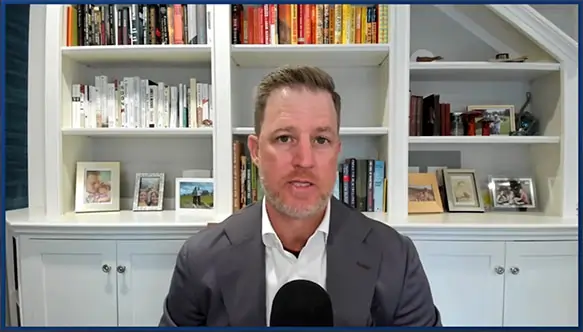
For federal drug cases, the choice of counsel matters from the initial investigation through final sentencing. Ben Stechschulte founded StechLaw Criminal Defense in 2012 after three years as a Hillsborough County prosecutor, where he prosecuted drug crimes, gun crimes, and other felonies. We handle federal drug matters as part of our broader federal criminal defense work across Florida.
Board-Certified Criminal Trial Lawyer
Ben Stechschulte is Board Certified in Criminal Trial Law by The Florida Bar, a credential held by fewer than 2% of attorneys in the state. To qualify, an attorney must complete at least five years of full-time practice, try at least 20 jury trials to completion, and pass a peer review of character, ethics, and professionalism. Ben has tried over 100 jury trials and over 250 non-jury cases. He graduated from Stetson University College of Law in 2005 and was named a Rising Star by Super Lawyers® in 2015. His prior prosecution work informs how he approaches federal drug defense, including how the government builds and tries these cases.
Federal Trial Experience and Results
Federal drug cases require counsel with substantial courtroom experience. In a recent Middle District of Florida, Tampa Division matter, a federal jury acquitted our client of conspiracy to distribute a controlled substance after the government’s multi-year investigation failed to result in a conviction at trial. Across our criminal defense work in Florida, we have secured acquittals, dismissals, charge reductions, and favorable plea outcomes for clients facing serious state and federal exposure.
What Is Important To Understand About Federal Drug Trafficking Cases?
Charges, Penalties, and Defense Strategies for Federal Drug Trafficking Cases
Federal drug trafficking penalties are driven primarily by drug type and quantity. Mandatory minimum sentences attach at threshold weights, and prior felony drug convictions can add years of additional exposure. Even without a mandatory minimum, the advisory federal sentencing guidelines produce ranges that often exceed those of comparable state offenses.
Common federal drug trafficking charges include:
- Possession with intent to distribute a controlled substance
- Distribution of a controlled substance
- Conspiracy to distribute or import
- Manufacturing or possessing precursor chemicals
- Importation across U.S. borders or maritime jurisdictions
- Use of a communication facility to facilitate a drug offense
- Maintaining a drug-involved premises
Defense strategies vary case by case. Common avenues include suppression motions targeting search warrants, wiretaps, vehicle stops, and confidential informant work; challenges to drug weight and purity calculations; constructive possession arguments; entrapment defenses where the facts support them; and safety valve and substantial assistance negotiations to reduce exposure when a plea makes sense.
What Are Important Aspects of a Federal Drug Trafficking Case?
A few features of federal drug practice set it apart from state court. Understanding them early changes how a case is defended.
- The investigation often predates the indictment by months or years. By the time agents make contact, the government typically has wiretaps, surveillance, and informant statements already in place.
- Mandatory minimums apply broadly and are limited only by narrow statutory exceptions. Safety valve relief, cooperation, and certain First Step Act provisions can reduce exposure in qualifying cases.
- The advisory federal sentencing guidelines shape most outcomes. Drug type, weight, role in the offense, criminal history, and acceptance of responsibility all factor into the calculation.
- Pretrial detention is common. In drug cases involving large quantities, a statutory presumption of detention applies and must be rebutted at a hearing.
What Is The Federal Drug Trafficking Case Timeline?
Federal cases tend to follow a longer timeline than state cases. The order varies, but most federal drug prosecutions follow a familiar pattern.
- Investigation, target letter, or grand jury subpoena. Some clients learn they are under investigation well before any indictment is returned.
- Indictment and arrest. Federal grand jury indictments are typically sealed until arrests are executed, which often occurs in the early morning hours.
- Initial appearance and detention hearing. Bond is decided within days, and detention is the presumed outcome in serious trafficking cases.
- Arraignment and discovery. Discovery in federal drug cases can include thousands of intercepted calls, laboratory reports, and surveillance materials.
- Pretrial motions and plea negotiations or trial. Most federal cases resolve by plea, although trial remains a viable option when the government’s case shows weaknesses.
- Sentencing. Federal sentencing takes place weeks after a guilty plea or verdict and involves a detailed presentence investigation report prepared by federal probation.
What Should You Bring to Your Federal Drug Trafficking Consultation?
Bringing the right documents to a first meeting helps us assess your situation efficiently and provide accurate information about your options.
- Any indictment, criminal complaint, or arrest paperwork you have received
- Target letters or grand jury subpoenas
- Search warrants, inventory lists, or seizure receipts
- Names of any agents who have contacted you, along with a summary of what was said
- Documents related to bond, pretrial release conditions, or detention
- Prior criminal history, particularly federal or drug-related convictions
We treat the first meeting as a confidential consultation. You do not need every document in order to schedule a meeting, but bringing what you have helps us identify the strongest defenses early.
What Are Important Florida Legal Resources for Federal Drug Trafficking Cases?
Federal drug trafficking prosecutions move through the United States District Court system rather than Florida state court. The resources below can help you understand how federal drug cases are investigated, charged, and sentenced.
- The U.S. Attorney’s Office for the Middle District of Florida prosecutes federal cases out of Tampa, Orlando, Jacksonville, and Fort Myers, and publishes press releases regarding recent indictments and convictions.
- The U.S. District Court Middle District of Florida maintains local rules, judge information, and electronic filing procedures.
- The U.S. Sentencing Commission publishes the current federal sentencing guidelines and annual statistics regarding federal drug sentences.
- The general federal statute of limitations for most non-capital drug offenses is five years, although conspiracy charges run from the last overt act rather than the start of the agreement.
These resources serve as general reference points. Anyone facing federal drug trafficking charges in Florida should consult a federal criminal defense attorney regarding the specifics of their case before relying on any general information.
Reach Out to StechLaw Criminal Defense to Schedule a Consultation
If you have been charged or believe you are under federal investigation, the earliest decisions in your case are often the most consequential. We offer a free initial consultation to discuss your situation and the next steps in your defense. Contact us to schedule a confidential meeting with our federal defense attorney. We respond promptly and treat every conversation as privileged.
Federal Drug Trafficking Statistics
 Federal drug trafficking cases make up a large share of the government’s criminal docket. Of the 66,662 federal cases reported in fiscal year 2025, more than 16,000 involved drug trafficking, according to Sentencing Commission data. The average sentence in those cases reached 87 months, and 56% carried a mandatory minimum penalty. Fentanyl has risen sharply and now appears in more than one in five trafficking cases. Matters filed in the Tampa Division of the Middle District of Florida are part of that same national picture.
The quantity involved largely determines a defendant’s exposure. Two milligrams of fentanyl is treated as a potentially fatal dose, and DEA fentanyl facts note that a single kilogram carries the theoretical potential to affect roughly half a million people. These figures help explain the resources federal agents devote to such investigations, and why early representation from a federal drug trafficking attorney often influences the course of a case.
Types of Evidence in Federal Drug Trafficking Cases
In federal drug cases, much of the government’s evidence is gathered well before an arrest is made. Reviewing how that evidence was obtained is central to identifying where a defense may be developed. The following are the categories of proof we encounter most often in federal drug trafficking prosecutions across the Middle District of Florida.
- Intercepted communications. Wiretaps and recorded calls form the backbone of many conspiracy indictments. The government must follow strict procedures to obtain a wiretap order, and wiretaps and surveillance authorized outside those rules can be challenged and, in some cases, suppressed.
- Confidential informants. Much of what agents learn early comes from cooperators seeking leniency for their own conduct. We examine their motives, their prior statements, and any promises the government made to secure their assistance. Their credibility often becomes a central question at trial.
- Controlled buys and surveillance. Investigators document transactions, photograph meetings, and record movement over weeks or months. We evaluate whether that record clearly connects our client to the charged conduct or merely establishes proximity. Gaps in the surveillance record and questions of identification frequently arise and merit careful review.
- Laboratory analysis. Drug type and purity set the sentencing range, which is why drug weight is one of the most heavily contested issues in these cases. We review how samples were tested, handled, and calculated, since errors in that process can affect a sentencing range by years.
- Search warrant evidence. Drugs, currency, and records recovered from homes and vehicles anchor many indictments. We review the supporting affidavit closely, because a warrant is only as sound as the facts sworn to obtain it. When officers exceed its scope, illegal searches can render that evidence inadmissible.
- Canine alerts. A drug detection dog is frequently cited as the basis for a roadside search. Training logs, reliability history, and the handler’s conduct are all subject to challenge.
- Digital and financial records. Text messages, social media data, deposits, and money transfers are used to argue distribution and profit. That same material often supports asset forfeiture proceeding alongside the criminal charge. Account ownership and metadata frequently require careful scrutiny.
- Constructive possession. When drugs are found in a shared residence or vehicle, prosecutors rely on constructive possession to connect them to a person who never physically held them. This distinction between proximity and actual control is frequently a focus of the defense.
Rarely does a single item of evidence determine the outcome of a federal drug trafficking case. An effective defense requires examining how each piece of evidence was gathered and whether the government can meet its burden of proof on every element of the indictment. We begin that review at the outset of representation.
Tampa Federal Drug Trafficking Lawyer FAQs
Do you offer a free consultation for federal drug charges?
Yes. We provide a free initial consultation to anyone facing or anticipating federal drug charges in Florida. The meeting is confidential, and it allows us to review any paperwork you have received, explain how cases proceed in the Middle District of Florida, and outline your options. You do not need every document in hand to schedule. Consulting a federal drug trafficking attorney early, before charges are formally filed, allows counsel to address the matter at a stage when more options may remain available.
How are federal drug charges different from state charges?
Federal cases operate under different rules, penalties, and timelines. The distinctions between federal and state crimes affect matters ranging from bond to sentencing. Federal drug trafficking charges tend to involve larger quantities, longer investigations, and mandatory minimums that state court may not impose. Sentencing follows advisory federal guidelines rather than a state scoresheet. Investigation, discovery, and trial practice also differ. For these reasons, federal cases generally warrant counsel experienced in the federal system.
Can a mandatory minimum sentence be avoided?
In some cases, yes. Congress has created limited avenues for relief from mandatory minimums, and many individuals convicted of an offense that carries one are ultimately relieved of it. The safety valve, mandatory minimum exceptions, and cooperation credit can each reduce exposure for those who qualify. The First Step Act expanded several of these provisions. Whether any of them apply depends on criminal history, the role in the offense, and the underlying facts. We evaluate eligibility for these provisions early, since it can significantly affect the overall defense strategy.
What does “substantial assistance” mean?
It refers to cooperation that provides the government meaningful help in investigating or prosecuting others. When the court credits it, substantial assistance can support a sentence below the guideline range, and in some cases below a mandatory minimum. It carries real risk and is not appropriate in every case. We review with clients what it involves, what protections exist, and what it realistically can and cannot accomplish before a decision is made.
Will my federal drug case go to trial?
Most federal cases resolve through a plea, but that is a decision rather than a foregone conclusion. We prepare every matter as though it will be tried, and that preparation also strengthens our position in federal plea negotiations. Trial may be warranted when the evidence is weak, when a suppression motion could undermine the government’s case, or when a proposed resolution carries greater consequences than proceeding forward. We provide clients with a candid assessment of both options. Our federal drug trafficking lawyer reviews the considerations relevant to a plea and to trial, so that the decision rests with an informed client.
Can I get bond in a federal drug trafficking case?
It is possible, though more difficult than in state court. Serious trafficking charges trigger a statutory presumption favoring detention, which the defense must rebut at a hearing. Community ties, steady employment, and a workable release plan all carry weight. Securing a federal bond usually requires a prepared, evidence-based argument at the first appearance. Because pretrial release can affect how the defense is prepared, we approach the detention hearing with thorough preparation.
Should I talk to federal agents if they contact me?
You should not speak with them without a lawyer present. Agents are trained interviewers, and an informal-seeming conversation can produce statements that follow you throughout the case. If you believe you are under federal investigation, you have the right to decline questioning until you have consulted counsel. This applies whether agents contact you by phone, appear at your home, or serve you with paperwork. We recommend consulting a federal drug trafficking lawyer before responding to any contact from federal agents.
Local Resources for Federal Drug Trafficking Cases in Tampa, FL
Federal drug trafficking cases in the Tampa area proceed through the United States District Court for the Middle District of Florida rather than state court. The offices below handle the filings, custody, and administration associated with a federal prosecution.
- Sam M. Gibbons Courthouse. 801 North Florida Avenue, Tampa, FL 33602. Clerk’s office: (813) 301-5400. Federal criminal matters in the Tampa Division are filed and heard at this location.
- Federal Public Defender. 400 North Tampa Street, Suite 2700, Tampa, FL 33602. (813) 228-2715. Appointed to represent defendants who cannot afford to retain private counsel.
- U.S. Marshals Service. 801 North Florida Avenue, Tampa, FL 33602. (813) 483-4200. Responsible for federal arrests, prisoner custody, and courthouse security throughout the district.
These listings are provided for general reference only. We do not endorse, and are not affiliated with, any office named above.
About StechLaw Criminal Defense
At StechLaw Criminal Defense, founder Ben Stechschulte devotes much of his practice to federal matters in the Middle District of Florida. A federal magistrate judge appointed him to the court’s Criminal Justice Act panel, the roster of attorneys called upon to defend federal criminal cases in this district. That standing informs how our firm prepares each federal drug trafficking case, from the first contact with agents through sentencing.
What Our Clients Say
The feedback we receive from the clients we represent means a great deal to our firm.
★★★★★
“Ben was amazing for my fiancé, when things weren’t looking good in court he did everything in his best interest to turn around the negative outcome that my fiancé was facing. He was willing to do anything and take it further to have a good outcome. His team is great, Darci is very well with communicating even with all the clients they have to deal with on a daily basis. They take the stress off of their clients and put it into their hands and that’s the true definition of a good Attorney. Thank you again Ben and Darci!”
Michelle Robertson
Additional client reviews are posted on our Google Business Profile.
Contact StechLaw Criminal Defense
If you are facing a federal drug investigation or charges in Florida, the decisions you make now can affect the entire case. Our federal drug trafficking lawyer offers a free, confidential consultation to review your situation and explain the next steps. The firm answers calls around the clock, and we respond to messages promptly. You will receive a clear assessment of the charges, the process, and the defenses that may apply. Contact us to speak with a federal drug trafficking attorney about your case.