

 Last Updated: 08-14-2026
 Read Time – Est:

Federal wire fraud defense from a Board Certified Criminal Trial Lawyer with over 100 jury trials in the Tampa Bay area.
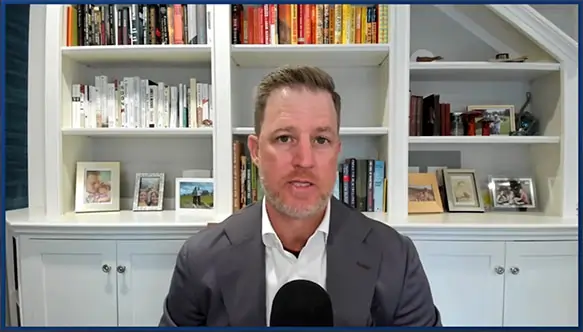
If you have been indicted, subpoenaed, or notified of a federal wire fraud investigation in Florida, the matter is time-sensitive, and the early decisions you make may shape the eventual outcome of the case. Wire fraud is the most frequently charged fraud statute in federal court and carries substantial sentencing exposure driven primarily by the alleged loss amount and the structure of the alleged scheme. Our federal wire fraud lawyer at StechLaw Criminal Defense, Ben Stechschulte, has practiced criminal law in the Tampa Bay area for nearly 15 years and has tried more than 100 jury trials and 250 non-jury cases. We offer a free consultation during which we will discuss the particulars of your situation in a private and confidential setting.
Federal Wire Fraud Lawyer
Federal wire fraud involves the use of interstate or international wire, radio, or television communications in furtherance of a scheme to defraud or to obtain money or property through materially false representations. The statute is intentionally broad and reaches telephone calls, emails, text messages, internet transmissions, and financial wires that cross state lines, which is one reason it appears in the majority of federal fraud indictments.
Wire fraud charges typically arise from sustained investigations conducted by the Federal Bureau of Investigation, the U.S. Secret Service, or the U.S. Postal Inspection Service, often in cooperation with financial institutions whose records reveal patterns of transfers. Florida ranks among the most active jurisdictions for federal wire fraud prosecutions, with significant case activity in the Tampa, Orlando, Jacksonville, Fort Myers, and Miami federal courts.
Types of Federal Wire Fraud Cases We Handle in Florida
Federal wire fraud charges arise from a wide variety of factual circumstances. The statute can apply to a single email used to misrepresent a material fact, or to a multi-year scheme moving funds through dozens of accounts. The list below reflects the categories of federal wire fraud matters our firm handles on a regular basis.
- Business email compromise and CEO impersonation. Business email compromise cases involve compromised or spoofed email accounts used to direct wire transfers to fraudulent destination accounts, frequently by impersonating company executives or trusted vendors.
- Investment and securities-related wire fraud. These matters involve interstate wire transmissions used in connection with Ponzi schemes, fraudulent stock or commodity offerings, or material misrepresentations made to investors. Federal criminal cases in this area frequently proceed in parallel with civil enforcement actions filed by the Securities and Exchange Commission.
- PPP loan fraud and pandemic stimulus wire fraud. PPP loan fraud and other COVID-era stimulus fraud prosecutions frequently include wire fraud counts based on the electronic transmission of loan applications and the subsequent disbursement of funds.
- Cryptocurrency and digital asset wire fraud. Cryptocurrency wire fraud cases involve allegations that material misrepresentations were made in connection with cryptocurrency offerings, exchange operations, trading platforms, or wallet services.
- Healthcare wire fraud. Healthcare wire fraud charges arise from electronic billing submissions made to Medicare, Medicaid, TRICARE, and private insurers that the government alleges contained false information.
- Telemarketing and elder fraud. Telemarketing wire fraud cases frequently involve operators, callers, and back-office personnel of call center operations alleged to have targeted older or vulnerable individuals.
- Real estate and mortgage wire fraud. Real estate wire fraud cases include fraudulent wire instructions sent during real estate closings, fraudulent mortgage applications, and related schemes that move closing funds to unauthorized accounts.
- Romance, dating, and online relationship fraud. Online relationship-based fraud cases frequently involve wire transfers solicited from victims through prolonged manipulated communications.
- Federal conspiracy. Many federal wire fraud indictments are charged as multi-defendant conspiracies, with each defendant potentially exposed to the loss amount attributable to the broader scheme.
- Wire fraud affecting a financial institution. When the scheme is alleged to affect a federally insured bank or savings institution, the statute of limitations extends to ten years and the sentencing exposure increases substantially.
Why Choose StechLaw Criminal Defense as my Federal Wire Fraud Lawyer in Florida?
In federal wire fraud cases, the credibility and experience of defense counsel can directly influence how prosecutors approach negotiations, how loss amount is ultimately calculated, and how the case resolves. Ben Stechschulte established StechLaw Criminal Defense in 2012 following a period as a Hillsborough County prosecutor. We address federal wire fraud as part of our broader federal fraud defense work.
Board-Certified Criminal Trial Lawyer
Ben Stechschulte holds Board Certification in Criminal Trial Law from The Florida Bar, a credential earned by fewer than 2% of attorneys in the state. Board certification requires a minimum of five years of full-time legal practice, completion of at least 20 jury trials tried to verdict, and successful peer review evaluating character, ethics, and professionalism. Ben graduated from Stetson University College of Law in 2005, served three years as a Hillsborough County prosecutor, and opened StechLaw Criminal Defense in 2012. He was recognized as a Rising Star by Super Lawyers® in 2015 and has tried more than 100 jury trials and 250 non-jury matters over the course of his career. His background prosecuting felony cases informs the manner in which he handles the defense of federal wire fraud charges, including loss amount disputes and the structuring of pretrial negotiations.
Federal Trial Experience and Results
Federal wire fraud cases demand counsel familiar with the structure of the federal sentencing guidelines and the impact of loss amount enhancements on the eventual sentence. In a federal wire fraud case involving $300,000 in alleged loss, we successfully challenged the government’s loss amount calculation and obtained a downward departure that reduced our client’s sentencing exposure from 51 months to 26 months. Across our broader criminal defense work, we have obtained acquittals, dismissals, charge reductions, and favorable plea outcomes for clients facing serious federal exposure.
What Is Important To Understand About Federal Wire Fraud Cases?
Charges, Penalties, and Defense Strategies for Federal Wire Fraud Cases
The elements of federal wire fraud require the government to prove a scheme to defraud, the use of interstate wire communications in furtherance of the scheme, and intent to obtain money or property through material misrepresentations. Penalties follow the federal sentencing guidelines for fraud, with the offense level driven primarily by loss amount and adjusted by enhancements such as the number of victims, use of sophisticated means, abuse of a position of trust, and aggravating role in the offense.
Common federal wire fraud-related charges include:
- Wire fraud
- Wire fraud affecting a financial institution
- Conspiracy to commit wire fraud
- Money laundering involving wire fraud proceeds
- Aggravated identity theft used in furtherance of wire fraud
- Bank fraud
- Securities fraud and market manipulation
- Mail fraud
- Computer fraud and unauthorized access offenses
Defenses in federal wire fraud cases frequently turn on the intent element, the materiality of the alleged misrepresentation, and the loss amount calculation. Additional avenues include challenges to the interstate nexus where the wire transmission was wholly intrastate, motions to suppress materials obtained through search warrants or grand jury process, severance arguments in multi-defendant cases, and negotiated resolutions involving cooperation credit or charge reduction.
What Are Important Aspects of a Federal Wire Fraud Case?
Several features of federal wire fraud practice influence how the case is built and defended. Recognizing them at the outset helps focus the defense on the issues that most affect outcome.
- Loss amount remains central to nearly every component of the sentencing calculation. The federal sentencing guidelines tie offense level closely to alleged loss, and the difference between adjacent loss tiers can produce years of additional sentencing exposure.
- The government’s intent evidence often relies on emails, text messages, and recorded communications. Establishing what the client knew, when the client knew it, and whether the alleged misrepresentations were material to the recipient is central to most wire fraud defenses.
- The wire fraud statute is broad and applies whenever interstate wires are used in furtherance of the scheme. The interstate nexus is generally straightforward for the government to prove, which means most defenses focus on intent, materiality, and loss amount rather than on the wire itself.
- Federal bond conditions in wire fraud cases frequently include surrender of passports, restrictions on financial transactions, and ongoing reporting to pretrial services.
What Is The Federal Wire Fraud Case Timeline?
Federal wire fraud cases generally develop over a longer period than comparable state prosecutions. The investigation, charging, and resolution stages each proceed under federal procedural rules, and most cases progress through a consistent sequence.
- Initial investigation and grand jury inquiry. Many wire fraud matters originate with a grand jury subpoena for documents or a target letter issued to the subject of the investigation.
- Indictment and arrest or summons. Wire fraud indictments are frequently unsealed when the defendant agrees to appear voluntarily through counsel, rather than during an early-morning arrest, although both procedures remain available to the government.
- Initial appearance, arraignment, and pretrial release. Pretrial release in wire fraud cases is typically granted with bond conditions tailored to the alleged scheme and to the defendant’s connections to financial institutions and assets.
- Discovery production and review. Wire fraud discovery routinely spans bank records, email accounts, accounting files, recorded conversations, and grand jury exhibits, all of which require systematic review by defense counsel and the client.
- Pretrial motions, plea negotiations, or trial. Many wire fraud cases resolve through negotiated pleas, although trial remains a viable option when the government’s intent evidence or loss amount calculation contains identifiable weaknesses.
- Sentencing. Federal sentencing in wire fraud cases occurs several weeks after a guilty plea or verdict and involves a presentence investigation report containing a detailed loss amount analysis prepared by the United States Probation Office.
What Should You Bring to Your Federal Wire Fraud Consultation?
Bringing the appropriate documents to an initial meeting enables a thorough review of the situation and an accurate discussion of the options available to you.
- Any indictment, criminal complaint, target letter, or grand jury subpoena received
- Search warrants and inventory receipts for any items seized during execution
- Subpoenas served upon banks, brokerages, employers, or business associates
- Documents related to bond, pretrial release conditions, or detention
- Bank statements, accounting records, email exchanges, and business filings relating to the alleged conduct
- Names of any agents who have made contact, accompanied by a summary of the communications
- Prior criminal history, particularly any federal or financial offenses
The initial meeting is treated as a confidential consultation. Complete documentation is not required to schedule a meeting; however, any documentation you are able to supply assists in identifying the strongest defenses at the earliest opportunity.
What Are Important Florida Legal Resources for Federal Wire Fraud Cases?
Federal wire fraud cases are investigated by federal agencies and prosecuted through the United States District Court system. The following resources can assist individuals seeking to understand how wire fraud cases are investigated, charged, and sentenced in Florida.
- The FBI Internet Crime Complaint Center publishes annual reports detailing reported internet-based wire fraud activity, including state-by-state data on losses and complaint volumes.
- The U.S. Attorney’s Office for the Middle District of Florida prosecutes federal wire fraud cases originating in Tampa, Orlando, Jacksonville, and Fort Myers, and publishes press releases regarding indictments and convictions.
- The U.S. Sentencing Commission publishes the current federal sentencing guidelines applicable to wire fraud and other federal fraud offenses, along with annual statistics on federal sentencing outcomes.
- The general federal statute of limitations applicable to wire fraud is five years, although schemes alleged to have affected a federally insured financial institution are subject to a ten-year statute of limitations.
These resources serve as general reference points only. Any individual facing federal wire fraud charges in Florida should consult with a federal criminal defense attorney regarding the specific facts of their case prior to relying upon any general information.
Reach Out to StechLaw Criminal Defense to Schedule a Consultation
If you have been charged or believe you are under federal investigation for wire fraud, the earliest decisions in your case are frequently the most consequential. We offer a free initial consultation during which we will discuss your situation and the next steps in your defense. Contact us to schedule a confidential meeting with our federal defense attorney. We respond promptly and treat every conversation as privileged.
Federal Wire Fraud Statistics
 Wire fraud is among the most frequently charged financial crimes in the federal system, and the losses attributed to it continue to climb. According to Federal Trade Commission data, consumers reported losing $12.5 billion to fraud in 2024, a 25% increase over the prior year, with bank transfers and payments accounting for the highest reported losses of any payment method. Investment-related schemes made up the single largest category. Because many of these transactions cross state lines electronically, they fall squarely within the reach of the federal wire fraud statute. Emails, phone calls, and text messages remained the most common ways scammers reached people, which mirrors how federal prosecutors typically prove the interstate communications at the center of these cases.
Federal sentencing data show that the average sentence in theft, property destruction, and fraud cases was 23 months in fiscal year 2025, and a substantial share of those sentences fell outside the calculated guideline range. The alleged loss amount remains the primary factor driving that calculation, which is why it is contested so often. Sentences that fall below the range frequently reflect the individual circumstances of the person charged and the arguments raised at sentencing.
Collateral Consequences of a Federal Wire Fraud Conviction
A federal wire fraud conviction carries consequences that extend well beyond a prison sentence. Many of these effects last long after a case concludes, and they often influence how a defense is approached from the outset. Some apply automatically upon conviction, while others depend on the offense level or the profession involved. The following are consequences that individuals facing federal wire fraud charges should understand early.
- Restitution to identified victims. Courts frequently order restitution in wire fraud cases, requiring repayment of the losses attributed to the scheme. The amount can be significant and may remain an obligation for years after a sentence is served. Restitution in fraud cases is generally mandatory and is not eliminated through bankruptcy.
- Forfeiture of money and property. The government often seeks asset forfeiture of funds, real estate, vehicles, or accounts alleged to be connected to the fraud. Forfeiture proceeds separately from restitution and can reach property acquired with the alleged proceeds of the scheme.
- Loss of professional licenses. A conviction can trigger disciplinary action against professional and occupational licenses, including those held by attorneys, medical providers, financial professionals, and real estate agents. These matters are handled by licensing boards that act independently of the criminal case, and for some professions a conviction results in suspension pending a separate board review.
- Immigration consequences. For non-citizens, a wire fraud conviction is frequently treated as a crime involving fraud or an aggravated felony, which can lead to removal proceedings regardless of immigration status or length of residence in the United States. Because the stakes are so high, non-citizens should raise their status with counsel at the earliest opportunity.
- Loss of civil rights. A federal felony conviction affects the right to vote while incarcerated, the ability to serve on a jury, and the right to possess a firearm. Restoring some of these rights is difficult and, in certain cases, not available at all. A separate legal process is usually required before firearm rights can be restored after a federal felony.
- Employment and financial effects. A conviction becomes part of the public record and can affect future employment, professional relationships, access to credit, and the ability to hold positions of financial trust. Certain regulated industries, particularly banking and securities, may bar individuals with a fraud conviction from working in the field.
- Related civil litigation. Victims identified in a criminal case may pursue separate civil lawsuits, and a conviction can make those claims considerably harder to defend. Findings from the criminal matter can carry into the civil case, which is one reason the two are best managed together.
Because these consequences reach so far beyond the courtroom, we account for them when advising clients and when weighing whether to negotiate a resolution or proceed to trial.
Tampa Federal Wire Fraud Lawyer FAQs
Do you offer a free consultation for federal wire fraud charges?
Yes. We offer a free and confidential consultation to individuals and businesses facing federal wire fraud charges in Florida. During the meeting, we review any documents you have received, explain how a case proceeds in the Middle District of Florida, and discuss the options available to you. You do not need to bring every record in order to schedule. The meeting is also a chance to understand the allegations before making any decisions. Speaking with a federal wire fraud attorney early, before charges are filed, often creates more room to respond effectively.
What is the difference between wire fraud and mail fraud?
The two offenses are closely related and are frequently charged together. Wire fraud involves the use of interstate electronic communications, such as emails, phone calls, or wire transfers, in furtherance of a scheme to defraud, while mail fraud involves the use of the mail or a commercial carrier for the same purpose. The underlying scheme and the intent the government must prove are similar, and a single case can include counts of both. Because the elements overlap, a defense that undermines the alleged scheme can affect both sets of counts at once.
Can I be charged with wire fraud if no money was lost?
Yes. The government does not have to prove that a victim suffered an actual financial loss. A charge can rest on a scheme to defraud and the use of an interstate wire in furtherance of it, even when the scheme was unsuccessful. That said, the amount of intended or actual loss heavily influences the potential sentence, which makes the loss calculation one of the most contested issues in these cases. We often focus on whether the government can prove the required intent to defraud, which is frequently the most vulnerable part of its case.
Can a wire fraud case also involve money laundering charges?
Frequently, yes. When funds obtained through an alleged scheme are moved, deposited, or spent, the government may add money laundering or related financial counts. These additional charges can increase the potential exposure considerably, and they often depend on tracing the movement of funds through banking records.
What should I do if federal agents contact me about a wire transfer?
You are not required to answer questions, and it is wise to speak with an attorney before any interview. Agents are trained to obtain statements in conversations that feel informal, and those statements can shape the case. If you believe you may be under federal investigation, the safest course is to decline to discuss the matter and to seek counsel promptly.
Can I be released on bond while a wire fraud case is pending?
In most wire fraud cases, pretrial release is available, though the court may impose conditions such as travel limits, financial reporting, and surrender of a passport. Securing a federal bond on favorable terms often depends on a well-prepared presentation of community ties, employment, and a workable release plan at the initial appearance. The court may also restrict access to financial accounts or business operations while the case is pending.
Can cooperation reduce the sentence in a wire fraud case?
It can, in the right circumstances. Cooperation often begins with a proffer session, and if the government credits a person with providing substantial assistance, the court may impose a sentence below the guideline range. Cooperation carries lasting consequences and is not the right choice for everyone, so we review it carefully with a client before any decision is made.
Local Resources for Federal Wire Fraud Cases in Tampa, FL
Federal wire fraud cases in the Tampa area are investigated by federal agencies and prosecuted in the United States District Court for the Middle District of Florida. The resources below may help individuals understand how these cases are investigated and handled. Contact details can change over time, so confirming them directly with each office is advisable.
- Sam M. Gibbons Courthouse. 801 North Florida Avenue, Tampa, FL 33602. (813) 301-5400. The federal courthouse where Middle District of Florida cases in the Tampa Division are filed and heard.
- U.S. Probation Office. 501 East Polk Street, Room 800, Tampa, FL 33602. (813) 301-5600. Supervises pretrial release and prepares the presentence report, which includes the loss amount analysis used at sentencing.
- U.S. Postal Inspection Service. Miami Division, serving Florida. 1-877-876-2455. Investigates mail and wire fraud schemes and accepts public reports of suspected fraud.
These listings are provided for general reference only. We do not endorse, and are not affiliated with, any office named above.
About StechLaw Criminal Defense
StechLaw Criminal Defense represents individuals and businesses against federal wire fraud charges prosecuted in the Middle District of Florida. Our results include favorable outcomes in federal fraud and financial matters, from disputed loss calculations to negotiated reductions in exposure. Our federal wire fraud lawyers handle each case from the earliest stage of an investigation through its final resolution, with attention to the issues that most affect the result. Because these matters proceed under federal rules that differ from state court, we prepare each one with those procedures in mind.
What Our Clients Say
★★★★★
“Ben and his team are amazing!
I couldn’t be more impressed with the service I received from Stechschulte & Nell.Finding a trustworthy and knowledgeable legal team is essential—and they exceeded all my expectations. From the very first consultation at I had at 10pm on a Friday night, Ben personally took the time to understand my legal needs and provided clear, practical advice and continued every step of the way.” – Lauren B.
Additional client reviews are posted on our Google Business Profile.
Contact StechLaw Criminal Defense
If you are facing federal wire fraud charges or believe you are under investigation in Florida, the decisions you make early can affect the entire case. We offer a free and confidential consultation with a federal wire fraud lawyer to review the allegations and discuss your options. Our office answers calls at any hour, and we respond to messages promptly. You will receive a straightforward assessment of the exposure you face and the defenses that may apply. Contact us to arrange a private meeting.