

 Last Updated: 09-25-2026
 Read Time – Est:

Are you looking for a federal securities fraud lawyer?
At StechLaw Criminal Defense, we provide federal securities fraud representation grounded in nearly 15 years of work on behalf of clients.
If the Securities and Exchange Commission has requested documents about a fund you manage, that request rarely stands alone. Civil regulators and federal prosecutors frequently work the same facts on parallel tracks, and testimony given in one proceeding can reappear in the other. Our federal securities fraud lawyer represents fund managers, brokers, company officers, and promoters accused of deceiving investors. We take engagements while a matter is still civil, which is often when the criminal exposure can still be shaped. Call our office to arrange a consultation.
Federal Securities Fraud Lawyer
A federal securities fraud attorney defends people accused of misleading investors or manipulating a market. The conduct alleged varies widely. Some cases involve overstated returns in an offering document. Others involve trades placed on information that had not yet reached the public, revenue booked in the wrong quarter, or coordinated buying meant to move a thinly traded stock.
Of the 66,662 federal cases reported to the U.S. Sentencing Commission in fiscal year 2025, 202 involved securities and investment fraud, a category that has grown 43 percent since 2021. The median loss in those cases was just under $3.8 million. The volume is small next to other federal offenses, but the consequences are not. Eighty-nine percent of people sentenced in that category received a prison term.
Types of Federal Securities Fraud Cases We Handle
Securities prosecutions tend to arrive with company. The government builds the core allegation around investor deception, then adds financial counts drawn from the same transactions. Our federal securities fraud attorney handles the matters below.
- Insider trading. Trading ahead of an announcement draws attention from exchange surveillance long before anyone contacts you. The government has to prove you possessed material nonpublic information and used it, and the second half of that sentence is where these cases are usually contested. Timing alone proves little. Many clients placed the trade for reasons documented well before the information existed, and that record is worth assembling early.
- Ponzi and offering fraud schemes. A fund that pays earlier investors from later contributions produces a straightforward government theory. We look at when the shortfall began, what the manager told investors at each stage, and whether the losses reflect deception or a strategy that failed.
- Accounting and disclosure fraud. Revenue recognition timing, reserve adjustments, and the treatment of related-party transactions can all support a charge when the government concludes that shareholders were misled. Accounting judgments made in good faith are frequently reframed as intentional after the fact.
- Market manipulation. Coordinated trading, matched orders, and promotional campaigns around low-volume stocks form the basis of these allegations. We examine the trading data the government relies on and identify activity with an ordinary commercial explanation.
- Wire fraud. Nearly every securities indictment includes wire counts, because electronic communications and transfers accompany almost every transaction. Each count carries separate penalties, which is how a single course of conduct becomes a lengthy indictment.
- Mail fraud. Mailed account statements, subscription agreements, and offering materials support the same charging approach where physical documents moved between the parties.
- Money laundering. Once prosecutors characterize investor funds as proceeds of fraud, ordinary transfers between accounts can support additional counts. We trace the movement of funds and separate legitimate business activity from what the government has labeled concealment.
- Federal conspiracy. Conspiracy counts allow the government to reach sales staff, outside consultants, and back-office personnel who never made a representation to an investor themselves.
- Digital asset and token offerings. Cryptocurrency projects have drawn sustained federal attention, and founders often learn that regulators view their token as a security only after an investigation is underway. These matters combine unsettled regulatory questions with conventional fraud theories.
Why Choose StechLaw Criminal Defense as my Federal Securities Fraud Lawyer?
Early Involvement Before Charges Are Filed
Securities matters usually surface as a civil inquiry well before a grand jury convenes. That interval is the most useful period in the case. Documents can be organized, privilege can be protected, and counsel can present context to the government while charging decisions remain open. Clients who wait until an indictment arrives give up that opportunity entirely. We accept engagements at the subpoena stage and treat the civil and criminal exposure as one problem rather than two. What a client produces to regulators in the first month often becomes the government’s exhibit list two years later.
A Former Prosecutor’s Read on Financial Cases
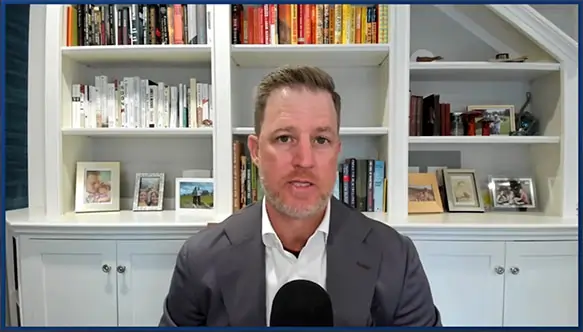
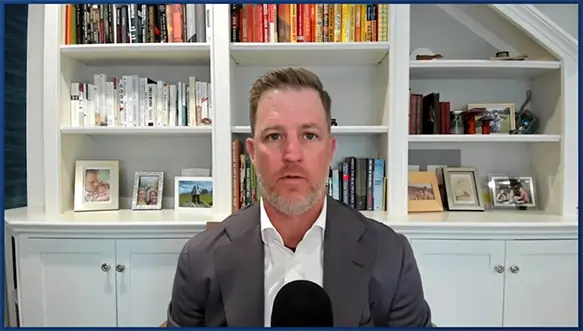
Ben Stechschulte spent the early part of his career as a prosecutor before moving to the defense side. He is board certified in criminal trial law by The Florida Bar and has tried more than 60 cases to verdict across nearly 15 years of practice. He earned his law degree at Stetson Law and was named to the Super Lawyers Rising Stars list in 2015. That background shapes our work as a federal fraud defense lawyer, where the operative question is what the government can prove to a jury rather than what a regulator believes happened.
Understanding Federal Securities Fraud Cases
Charges, Penalties, and Defense Strategies for Federal Securities Fraud Cases
Certain questions decide most securities prosecutions.
- Whether the misstatement or omission was material, meaning a reasonable investor would have cared about it
- Whether the defendant acted with intent to deceive rather than optimism, error, or reliance on accountants and counsel
- The loss figure attributed to the conduct, which drives the sentencing range further than any other variable
- Whether investors actually relied on the representation the government has identified
- Whether the conduct falls inside the limitations period for the counts charged
- Whether the government can distinguish our client’s role from the roles of cooperating witnesses
Defense work in these matters concentrates on intent and loss. Attacking the government’s loss calculation frequently produces more benefit than contesting whether a statement was made at all.
What Are Important Aspects of a Federal Securities Fraud Case?
Two features set these prosecutions apart from ordinary criminal matters. The first is the parallel track. An SEC investigation and a criminal investigation can run at the same time on the same facts, and sworn testimony given to regulators is available to prosecutors. Deciding whether to sit for an interview, invoke the Fifth Amendment, or negotiate terms requires knowing what the criminal side looks like, not only the civil side.
The second is the paper. Securities cases are built from emails, trading records, and internal memoranda produced over a period of years. Government lawyers select the documents that support their theory and present them in sequence. Much of the defense work involves restoring what surrounded those documents at the time. A message that reads badly in isolation often looks different alongside the thread it came from.
Understanding whether you are a witness, a subject or a target also changes the strategy substantially, and that designation can shift as an investigation develops.
What Is The Federal Securities Fraud Case Timeline?
These matters unfold over years rather than months, and the sequence is fairly consistent.
- Regulatory inquiry. Voluntary document requests, then formal subpoenas and sworn testimony. SEC criminal charges do not exist as such, but the agency refers matters to the Justice Department.
- Criminal investigation. Grand jury subpoenas, agent interviews, and in some cases proffer sessions with counsel present.
- Charging. An indictment, sometimes accompanied by asset seizures affecting accounts and property.
- Pretrial. Release conditions and discovery. Obtaining a federal bond in a financial case usually involves conditions on business activity.
- Resolution. Plea negotiations or trial, followed by sentencing where the loss amount is litigated in earnest.
What Should You Bring to Your Federal Securities Fraud Consultation?
The right materials let us assess your position rather than speak in generalities.
- Subpoenas, document requests, or correspondence from the SEC, FINRA, or a United States Attorney’s Office
- Offering documents, private placement memoranda, and investor communications
- Trading records and account statements for the relevant period
- Names of accountants, auditors, or attorneys who advised on the transactions at issue
We will explain how the government is likely framing the matter and what your realistic options are. If the answer is that you should wait and preserve documents, we will tell you that.
Federal Enforcement Agencies and Criminal Justice Resources
Several agencies publish material describing how securities investigations proceed.
- How investigations work, the SEC’s own description of its process from informal inquiry through enforcement action
- Division of Enforcement overview, including how the agency coordinates with criminal authorities
- White-collar crime program materials from the FBI, which investigates securities and commodities fraud
- Investor bulletin on SEC investigations, published by the Office of Investor Education and Advocacy
Reach Out to StechLaw Criminal Defense to Schedule a Consultation
Most clients call us after a subpoena arrives and before anyone has been charged. That is the right time. We offer a free initial consultation, and we will review what you have received and explain where the matter appears to be heading. Contact us to arrange a time to discuss your case. We can begin work while the investigation is still open.